Facebook launches tools to keep faith-based communities connected during COVID-19
April 10, 2020
Uganda to benefit from US10 billion response facility to curb COVID-19
April 10, 2020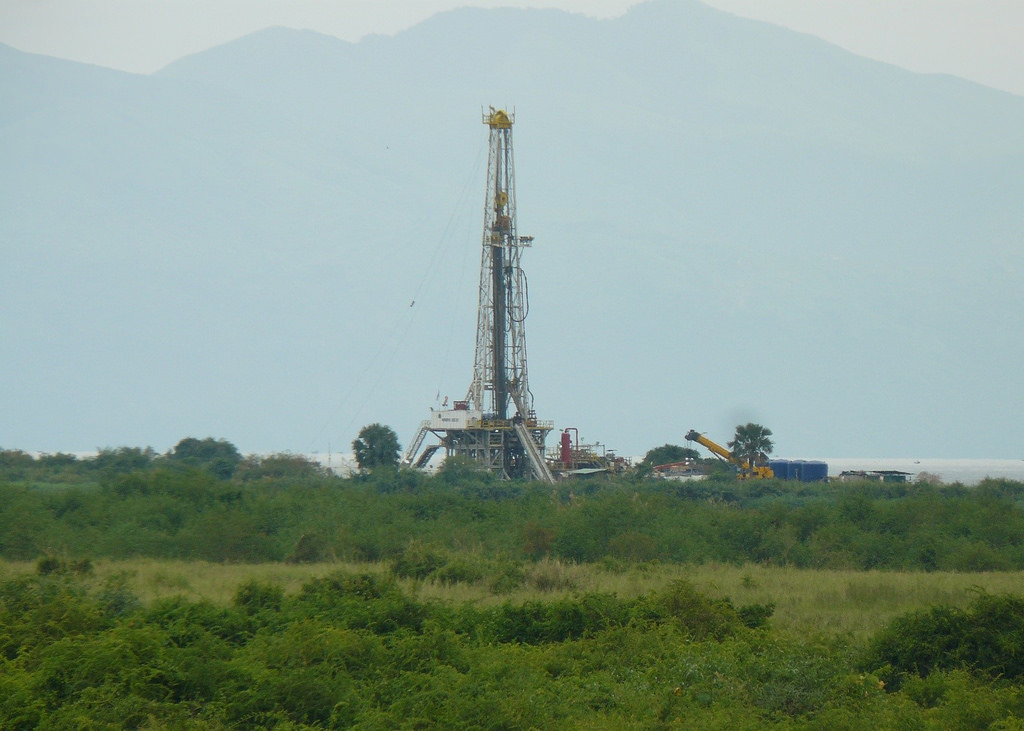
By George Mangula
Ugandan youth affected by oil projects in the Albetine Graben in western Uganda days ago convened and published a communiqué related to promotion of green jobs in the oil-rich region among other issues like environmental and cultural degradation. Read on the communiqué published by Kyomugisha Akiiki, Coordinator, Association of Oil-affected University Youth:
In February and March 2020, we, university youth and women leaders who come from Uganda’s oil region, partnered with Africa Institute for Energy Governance (AFIEGO) to organise experience sharing meetings and film screenings.
We approached AFIEGO, a non-governmental organisation (NGO) that sensitises communities to promote environmental conservation and community livelihoods amidst oil threats, to organise the experience sharing meetings and film screenings after realising that the majority of youth and community members are unaware of the negative impacts of oil activities.
The above groups mostly know about the few positive impacts that have been shared by government at every fora such as community meetings, radio talkshows and public hearings among others.
The objective of our activities therefore was to raise awareness of the impacts oil has on the environment and communities so that communities, women and youth can work for the prevention of those impacts.
Through working with AFIEGO, we were able to reach university youth and women leaders from nine districts affected by the Tilenga, Kingfisher, East African Crude Oil Pipeline (EACOP) and oil roads projects. The youth that were reached were from the districts of Hoima, Kikuube, Kakumiro, Rakai, Kyotera, Lwengo, Masindi, Kagadi, Kibaale and others.
In addition, youth from Kasese district where government has put the Ngaji oil block that covers the ecosenstive Queen Elizabeth National Park and Lake Edward which border the Democratic Republic of Congo’s (DRC’s)Virunga National Park up for licensing were reached.
Through the experience sharing meetings and film screenings, we, university youth and women leaders, learnt about the adverse and sometimes irreversible impacts oil exploitation activities have on the environment, communities’ livelihoods, youth employment, community health, cultures and other aspects of life.
The lessons we gained were based on the experiences of oil-producing countries such as Nigeria, Uganda, Ecuador and the United States of America (USA). 2
Following the experience sharing meetings and film screenings, we have made the following observations and recommendations for government’s action.
Observations
Not enough jobs: The university youth and women leaders appreciate that government is trying to create job opportunities for youth through industrialisation, oil exploitation and other activities. In a country where over 62% of the youth are jobless and Ugandan universities release over 400,000 graduates in a saturated job market, it is important that the Ugandan government spares no effort in creating jobs for the youth. Having learned of the oil experiences of Ugandan, Nigerian, Ecuadorian and U.S. communities however, we are of the firm view that government efforts to create jobs through the promotion of oil exploitation activities are misguided and dangerous. We hold this view because we learnt that the majority of oil-affected communities do not get meaningful jobs in the oil sector as they are said to be unskilled. Moreover, Uganda’s oil sector will generate only over 160,000 direct and indirect jobs,. These are not enough for even the graduates that Uganda produces in one year. Yet experience from oil-producing countries shows that less jobs than those government says will be created by the oil and other sectors often get created. Moreover, the Dutch Disease may end up affecting jobs in other sectors. We are therefore of the view that the much-talked about benefits of oil exploitation in the form of jobs outweigh the sector’s costs or disadvantages.
Risking viable ecofriendly economic activities: We concede that one by one makes a bundle and government efforts to create jobs here and there is important for addressing youth unemployment. However, creating a few jobs in the oil sector at the expense of tourism, agriculture and other ecofriendly economic activities must be strongly avoided by government. The destruction of tourism resources such as national parks, forests, lakes and rivers risks the jobs of the 667,600 Ugandans and others that work in the tourism and travel industry. Oil activities are also a threat to agriculture, the pre-dominant economic activity in Uganda on which over 68% of Ugandans solely rely to make a living. We are of the strong view that it would be detrimental for government to promote oil exploitation at the expense of agriculture and tourism among other ecofriendly economic activities. Government should learn from Nigeria which destroyed the agricultural and fisheries sectors in the oil-producing region and communities are suffering. We don’t want the same to happen in Uganda.
Increasing indebtedness: We are also aware and are concerned that Uganda has invested a high amount of money in the oil sector amidst increasing energy transition efforts in which countries are weaning themselves away from fossil fuels such as oil while promoting clean energy. Under the oil exploration phase alone, oil companies invested over USD 3.5 billion in the oil sector. Before oil production commences and under the development
phase, it is expected that oil companies and government will invest up to USD 20 billion –which is only USD 9 billion less of Uganda’s GDP of USD 29 billion. The above money will be used to construct the EACOP, other pipelines, central processing facilities, roads, airports and other infrastructure. Most of the above money will be borrowed amidst lower returns from the oil sector due to the ongoing just energy transition efforts in various countries. This will further stress Uganda and fail government from providing services such as health, education, job creation and others that are critical for youth’s development. We are calling on government to avoid this dire situation through investing in agriculture and other ecofriendly green sectors that are economically viable.
Unfair compulsory land acquisitions: We decry the fact that many of our families have suffered unfair compulsory land acquisitions where government has failed to pay us fair, adequate or prompt compensation. As we speak at the moment, some of our families are waiting to be compensated under the EACOP project yet a cut-off date was placed on our parents’ land and they can’t engage in meaningful economic activities. This has made it harder for our parents to raise our school fees. We do not want other youth who will be affected by oil projects to suffer the same fate yet the economic returns from oil will be little and will not benefit communities.
Environment and health impacts: Oil and gas activities have serious consequences on the environment and health of communities. Even in more developed countries such as Nigeria, Ecuador and the U.S., oil impacts on the environment and community health have not been avoided. National parks, forests, water sources, air and others have been polluted despite promises by oil companies that they would not pollute the above ecosensitive areas. Though the Ugandan government had made oil companies to carry out Environmental and Social Impact Assessment (ESIA) studies for oil projects, the ESIAs were too weak and they cannot protect the environment and communities’ health following oil pollution. Consequently, communities stand to suffer because water and soil pollution would cause food insecurity, loss of access to clean and safe water, decline in fisheries resources and others. Moreover, the toxic compounds used in oil exploitation activities and oil pollution would lead to cancer, preterm births, skin diseases, respiratory illnesses, headaches and others. Are these impacts worth the estimated USD 2.5 oil revenues that would be got from oil exploitation per year? They are not. Moreover, due to the high levels of corruption in Uganda, these oil revenues will be abused or irregularly used as most of the oil revenues that Uganda has collected todate have been irregularly used.
Cultural degradation: We are also concerned about the cultural degradation that is ongoing and will arise because of oil activities. Communities in Uganda whose experiences we learnt about decried the destruction of sacred natural sites and cultures that are ongoing because of oil activities. In countries such as Ecuador, the destruction of cultures because
of oil activities was also seen. Culture is not only important to the Ugandan oil-affected youth because it gives us a sense of belonging but also because it is important in maintaining ecofriendly jobs such as organic farming, sustainable fishing, crafts making and others that youth can engage in. We are therefore against the destruction of cultures because of oil activities.
Recommendations
In view of the above, they recommended the following:
Promote green jobs over oil: We are calling upon government to promote green jobs in the agricultural, tourism, solar energy and other sectors. Many of us are studying environmental, tourism, hospitality and other courses. Promotion of the above sectors over oil will ensure that we get jobs. Government should therefore increase investments in the agriculture and tourism and sectors among others.
Focus on solar energy: We understand that some of our peers are undertaking or have undertaken courses in petroleum geosciences amongst other oil courses. Instead of encouraging students to study courses for a sector that is going to be relegated due to the ongoing just energy transition efforts that are promoting clean energy over oil, government should focus on skilling Ugandan youth to work in the solar sector. Already, Ugandans have shown that they are interested in solar energy. Offgrid energy access has overtaken grid energy access with offgrid access standing at 26% while grid access stands at 24%. Ugandans need skilled youth to offer services in the offgrid energy sector.
Implement commitments under the Paris Agreement and Uganda’s NDCs: Government must implement commitments made under the Paris Climate Change Agreement and Uganda’s Nationally Determined Contributions (NDCs). Youth and other Ugandans are suffering economic losses and the loss of life arising from flash floods, mudslides, landslides and other impacts caused by climate change. Investment in oil activities, which is against the Paris Climate Change Agreement and Uganda’ NDCs whose overall goal is to curb global warming, will worsen youth and other Ugandans’ suffering caused by climate change. Government should avoid this by investing in ecofriendly economic activities.
Avoid oil activities: In line with the above, the Ugandan government should avoid conducting oil activities in at least ecosensitive areas. Oil developments in national parks such as Murchison Falls National Park and QENP, lakes such as Albert and Edward, rivers such as River Nile, forests such as Bugoma, Wambambya and others, wetlands and others must be avoided to promote communities’ livelihoods and wellbeing.
Finally, development partnersshould support Uganda to invest in clean renewable energy such as solar projects to minimise the environmental impacts that arise because of lack of access to clean energy.