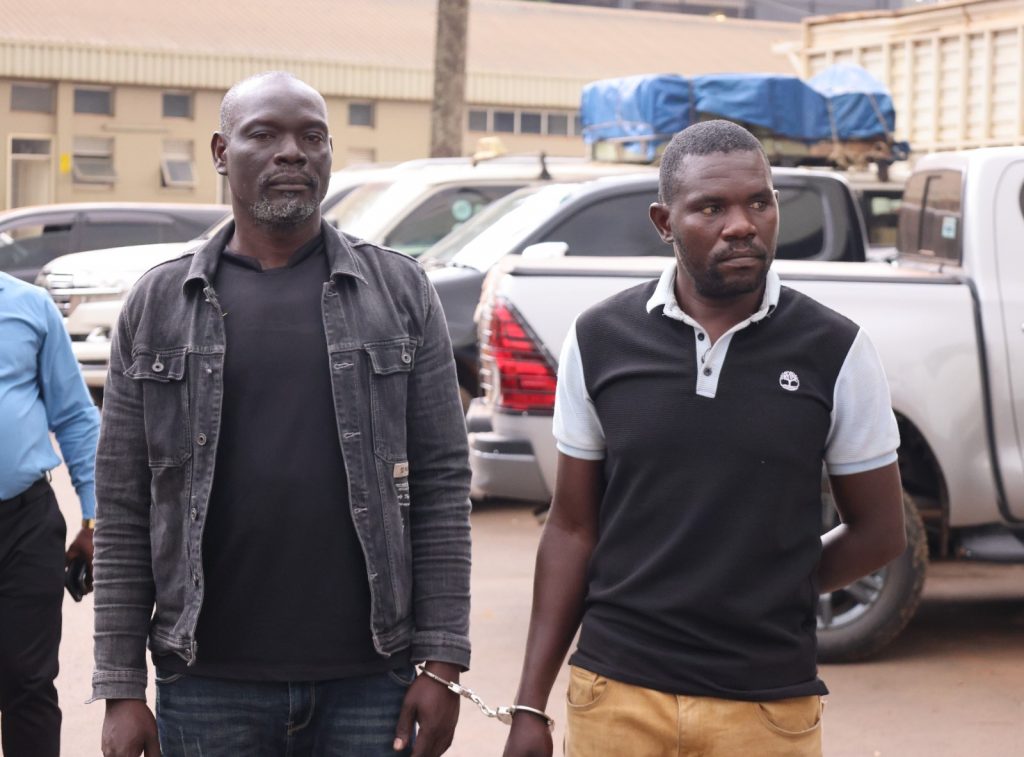
Police hunt businessman over gold
May 10, 2021
MANIFESTO WEEK! Cheptoris: 35 districts have their water coverage above 80%
May 12, 2021
The Ministry of Foreign Affairs’ biggest commitment in the 2016-2021manifesto was to pursue a foreign policy of peaceful and friendly relations with all countries, especially the neighbors, on the basis of respect for each other and mutual benefit.
According to the State Minister for Foreign Affairs, Henry Okello Oryem, Uganda’s foreign policy is structured in a framework of bilateralism, regionalism and multilateralism in a pattern of concentric circles. Our sub-region and region in particular forms the inner circle. Priority has been given to the development of relations with these countries to ensure a peaceful, secure and stable neighborhood, to safeguard peace, security and development within our own borders.
Reporting the progress on the above commitment on Friday at the OPM auditorium, Okello Oryem said the following in terms of progress:
Uganda – Kenya
Uganda and Kenya enjoy warm and fraternal relations. The bilateral relations are pursued mainly through the framework of a Joint Ministerial Commission (JMC). The first session of the JMC was held in Nairobi, Kenya from 21 st -26 th March 2019 pursuant to the Agreement establishing the Joint Ministerial Commission (JMC) that was signed on 20 th February 2014.
Uganda – Tanzania
Uganda and Tanzania enjoy warm and cordial historical bilateral relations. The bilateral relations between the two countries are mainly pursued through the Joint Permanent Commission (JPC). The 3 rd session of the JPC was held on 3 rd -5 th September 2019 in Dar-es- Salaam Tanzania. Uganda was supposed to host the 4 th session in Kampala in 2020. However, due to the interruptions caused by the COVID-19 pandemic, this session did not take pace.
Details of the discussions that were held at the 3 rd Session of the JPC are available on file. It is important to track implementation of the decisions made at this session. It will also be important to determine when Uganda can host the 4 th Session of the JPC as soon as the COVID-19 situation normalizes.
Uganda – Rwanda
Relations between Uganda and Rwanda hit an all-time low in February 2019, when
Rwanda unilaterally closed its borders with Uganda and imposed a trade embargo on
Uganda.
Our bilateral issues with Rwanda have been handled with the framework of the Luanda process co-facilitated by Angola and the Democratic Republic of Congo (DRC).
Four quadripartite summit meetings have been held since July 2019, aimed at normalization of relations. All summits have been attended by the respective Heads of State, a sign of the commitment to dialogue and address bilateral and regional concerns.
A Quadripartite Summit was also held in Katuna on 21 st February 2020 where a number of issues relating to border closures were discussed.
Normalizing the relations between the two countries remains a key undertaking for the
Ministry with guidance from the H.E the President
Uganda – Burundi
Relations between Uganda and Burundi are generally warm and cordial.
The political and security situation in Burundi remains volatile despite the general elections in May 2020 and the inauguration of a new President, H.E Evariste Ndayishimiye. The Inter-Burundi Dialogue that was facilitated by the former President Benjamin William Mkapa of Tanzania has largely collapsed without any tangible outcome. The dialogue did not enjoy the cooperation of the Burundi Government.
President Museveni is the Mediator of the Inter Burundi Dialogue.
Having emerged from conflict and political instability that has shattered the economy,
Burundi will continue to be a key ally of and Uganda will continue to support them in building the economy, and its institutions. The Ministry of Foreign Affairs will have an important role to play in that regard.
Uganda –DRC
Uganda and DRC enjoy cordial bilateral relations. The DRC is an important strategic partner to Uganda, especially in terms of trade and security. Uganda and DRC have bilateral cooperation framework following the signing of agreement establishing the Joint Permanent Commission (JPC) in 1986. The JPC meets every two years. The 7 th session of the JPC was hosted by Uganda from 18 th -20 th October 2018. DRC was to host the 8 th session in 2020 but this did not take place due to Covid-19 pandemic. There is need to follow up for possible holding of the JPC in 2021.
Uganda’s bilateral relations with the DRC have further been boosted by a series of high-level visits. President Felix Antoine Tshisekedi Tshilombo paid a successful two-day State visit to Uganda in November 2019, during which a number of decisions were made by the Ministers and the two Heads of State.
Uganda-South Sudan
Relations between Uganda and South Sudan are cordial. South Sudan gained its independence from the Republic of Sudan in 2011. However, the young country immediately plunged into civil war following power struggle between H.E. President Salva Kiir and his Vice President Riak Machar.
Following several years of IGAD led mediation, several agreements have been signed.
Notably, in 2018, the Revitalized Agreement on the resolution of Conflict in South
Sudan (R-ARCCS) was signed which has led to the formation of a national unity with the reappointment of Riak Machar as one of the Vice Presidents.
Efforts continue to resolve the South Sudan conflict with Uganda playing vital role both within the IGAD framework and at bilateral level where H.E. Yoweri Kaguta Museveni, President of the Republic of Uganda has on several occasions hosted different South Sudanese groups/factions in order to find solutions to the conflict.
However, the conflict in that country coupled with general insecurity and lawlessness has affected the bilateral relations especially through ambushes that disrupt movement of goods and people. There has also been several cases of killings and mistreatment of Ugandans working/doing business in South Sudan, border incursions and refugee influx.
Uganda through Ministry of Foreign Affairs has engaged South Sudan Authorities on border issues especially on Elegu border standoff. The movement of traffic to South Sudan has now resumed. The Ministry of Foreign Affairs is spearheading the process of border demarcation with all our neighboring countries starting with South Sudan.
Uganda-Sudan
Sudan – Uganda bilateral relations have been improving over the years. The main cooperation framework is the Joint Ministerial Committee (JMC). The 5 th session of the JMC was held in Kampala, Uganda from 5 th -7 th December 2019 where the status of implementation of decisions of previous meetings were reviewed. The main areas of interest to RPS include political and diplomatic cooperation, defense and security.
Details of the outcome of the 5 th JMC are on file.
Sudan has been a big market for Uganda’s tea and coffee worth $87.7 Million dollars.
This market was affected by the economic downtown which led the removal from office of the previous administration. The Ministry will continue to engage with the authorities in Khartoum with a view to ensuring that when the situation normalizes, that market can be tapped more.
The growing tension between Sudan and Ethiopia over the border dispute in an area known as Al-Fashaga and the outstanding dispute on the Grand Renascence Dam has led Sudan to approach Uganda for an understanding to mediate in these difficult issues.
The Ministry of Foreign Affairs will therefore have an important role to play on these issues.
Uganda-Ethiopia
The bilateral relations between Uganda and Ethiopia is handled mainly through a Joint
Ministerial Commission. In 1993 their Excellencies the two Heads of State concluded an
Agreement on Friendship and Cooperation between Uganda and Ethiopia. This
Agreement also established the Joint Ministerial Commission.
The last JMC was held in Kampala Uganda from 14 th -16 th August 2019 with the aim of accelerating progress on the implementation of decisions agreed upon during the
Second session of the JMC as well as directives by their Excellences President Yoweri
Kaguta Museveni of Uganda and Prime Minister Abiy Ahmed of the Federal democratic
Republic of Ethiopia. Various agreed upon areas as well the directives require follow up.
The issues of the Nile Basin Cooperative Framework Agreement on the River Nile as well as the Ethiopian Great Renaissance Dam are also very critical to Uganda-Ethiopia bilateral relations and has a regional dimension.
The Grand Ethiopian Renaissance Dam (GERD)
The ambitious Grand Ethiopian Renaissance Dam (GERD) has been a point of contention between Ethiopia, Egypt, and Sudan in recent years. The Trilateral Dialogue (Egypt, Ethiopia and Sudan) through the Ministers of Water of the respective countries agreed to establish a National Independent Scientific Research Group (NISRG) composed of five scientific experts from Egypt, Sudan and Ethiopia, the Group was to provide an informed scientific position on the issue.
H.E. the President has proposed that a Summit of all Heads of State and Government of the Nile Basin Countries be convened to extensively discuss and resolve all the outstanding issues on River Nile. The Ministry of Foreign Affairs will have an important role to play in resolving the transboundary issues in the immediate and long term.
Uganda- Egypt
Relations between Uganda and Egypt remain cordial. The Second session of the
Uganda –Egypt Joint Ministerial Commission (JMC) was held from 05 – 7 May, 2018 in
Egypt. The Session was preceded by the State Visit by H.E. Yoweri Kaguta Museveni,
President of the Republic of Uganda to Egypt on 08 May 2019.
There was a planned State Visit to the Arab Republic of Egypt by H.E the President of
Uganda in mid-April, 2020. In his communication to H.E. Fattah El Sisi, he emphasized the need to intensify efforts to scale up trade, tourism and investment in order to contribute to the socio, political and economic development of peoples of both countries.
The Third session of the JMC was supposed to be convened prior to the State Visit, however, due to COVID 19 Pandemic, it couldn’t take place. We had proposed that, JMC be convened in the second half of 2021. It is Uganda’s turn to host the meeting.
Since the signing and ratification by Uganda of the Nile Basin Cooperative Framework
Agreement in August 2019, Egypt has viewed Uganda with a bit of apprehension. In
April 2021, Chiefs of Military Intelligence of Egypt and Uganda signed a memorandum of understanding on military intelligence sharing. Egypt is an important player on regional and multilateral issues. The Ministry will continue to harness bilateral relations for mutual benefits but also address any outstanding concerning both countries.
Uganda- Somalia
Relations between Uganda and Somalia remain cordial. Uganda remains the largest troop contributing country under African Union Mission in Somalia (AMISOM) and was the first country to deploy troops to Somalia in 2007.
AMISOM has contributed to the stability of the country which led to the return of the government from tom Mogadishu from Nairobi, establishment of state institutions and the recovery of an economy that has been battered by the civil war. Despite the remarkable efforts by AMOSOM, a political stalemate currently exists between the central government and the federal state mainly Jubaland and Portland. The stalemate arose from differences on when elections would be held leading to the formation of a new government. The persistent of the stalemate has a bearing on the overall security situation of the country and the work of AMISOM.
Okello Oryem said that the Ministry has long recognized that international trade can play a major role in the promotion of economic development and the alleviation of poverty.
This, the ministry say was yet again witnessed in the in the Financial Year 2019/2020.
According to Okello Oryem, Uganda’s exports increased from $2.687bn in FY 2015/16 to $3.799bn 1 in FY 2019/20 representing a growth of 41.38%.
He says United Arab Emirates is number one Uganda’s export market followed by Kenya, DRC, South Sudan, Rwanda, Turkey, and Netherlands respectively.
During the period under review, Okello Oryem said, in a bid to widen export promotion, Uganda engaged with countries through bilateral negotiations, Joint Permanent Commissions (with Sudan, Democratic Republic of Congo, Tanzania, Kenya and Ethiopia), symposiums and exhibitions to facilitate trade in the region and with the rest of the world.
“The engagements in the region have helped to reduce trade restrictions hindering Uganda’s exports,” he said.
The other commitment was for Foreign Affairs to pursue a policy of commercial diplomacy to protect trade and investment.
Under this, the ministry was to set up promotion of tourist sites to attract more tourists to Uganda, as part of the Ministry’s economic and commercial diplomacy in order to earn more from the tourism sector.
Others were, mobilize investors in agro-processing and value addition from countries such as Netherlands, India, Israel, Turkey, Egypt and UK; Strategic Directive No 3: Publicizing opportunities and mobilizing investments including through Public Private Partnerships (PPPs) for development of the industrial parks/export processing zones. The following have been achieved; Strategic Directive no. 10: Following up on implementation of ratified Paris Agreement on Climate Change and mobilizing funding from the Green Climate Fund (GCF) and other sources for the protection of the environment.
According to Okello Oryem, the Ministry has long recognized that international trade can play a major role in the promotion of economic development and the alleviation of poverty. To that end, the Ministry has been at the forefront of seeking market access for Uganda’s products.
Okello Oryem says overall, Uganda’s exports increased from $2.687bn in FY 2015/16 to $3.799bn 1 in FY 2019/20 representing a growth of 41.38%. United Arab Emirates is number one Uganda’s export market followed by Kenya, DRC, South Sudan, Rwanda, Turkey, and Netherlands respectively.
Uganda engaged with countries through bilateral negotiations, Joint Permanent
Commissions (with Sudan, Democratic Republic of Congo, Tanzania, Kenya and
Ethiopia), symposiums and exhibitions to facilitate trade in the region and with the rest of the world. The engagements in the region have helped to reduce trade restrictions hindering Uganda’s exports. For example on; –
A. Kenya
On 12 th April 2021, a joint Ministerial Committee meeting between Uganda and Kenya was held in Kampala to discuss and resolve among others, the issues of Sugar, Maize, milk, poultry, meat, eggs and all Non-Tariff Barriers affecting trade between the two Countries.
The meeting agreed on a number areas including:
i. Uganda shall export 90,000mt of wholly originating sugar per annum.
ii. Kenya will share with Uganda the food and crop standards regulations to enable compliance by players in export trade between the two countries.
iii. Each country shall amend the applicable laws to bring them into conformity with the EAC customs union protocol with effect from 1 st July 2021 regarding restrictive measures such as imposition of taxes of goods by both countries.
The Ministry will continue working with relevant stakeholders to implement the decisions agreed upon in the joint Communique.
B. South Sudan
Insecurity and lawlessness has affected the bilateral relations especially through ambushes that disrupt movement of goods and people. There has also been several cases of killings and mistreatment of Ugandans working/doing business in South Sudan, border incursions and refugee influx.
Uganda through Ministry of Foreign Affairs has engaged South Sudan Authorities on border issues especially on Elegu border standoff. The movement of traffic to South Sudan has now resumed.
C. DRC
Uganda in partnership with DRC has agreed to build 5 roads and one bridge (Mpondwe/Kasindi Road 80km; Beni-Butembo 54km; Bunagana- Rutshuru road 89km; Nebbi-Goli-Mahagi- Bunia 181km; Rwebisengo-Budiba-Bunia including construction of a bridge across River Semuliki), to boost trade and relations between the 2 countries. These were agreed during the Joint Permanent Commission (JPC).
“We have also agreed on marine transport on Lakes Albert and Edward,” he said.
D. Rwanda
Engagements are still ongoing with Rwanda through bilateral and multilateral consultations to normalize bilateral trade.
E. Alternative markets
Uganda is also seeking alternative markets beyond the region for export of Uganda’s products such as Diary and Dairy Products, Beef, poultry, maize. For example, in August 2020, Algeria agreed in principle to import Uganda’s diary and dairy products in the form of powdered milk. Government has already sent samples to Algeria which are currently undergoing tests.
Investments
In terms of investment, Okello Oryem says 11 investors have been mobilized to invest in Uganda.
They are;
i. German Firm SUN farming GmbH agreed to Invest USD 50 Million in Food and
Energy Projects in Uganda. The firm is to partner with the Presidential Initiative on
Banana Industrial Development to carry out the project at the Institute;
ii. Hainan Qinfu Co. Ltd obtained an investment license from UIA on 24th October
2018 to invest US $ 179million in freshwater aquaculture;
iii. A Dubai based company, Al Rawabi Farms, was attracted to establish a $100m farm in Masaka;
iv. Shanghai GreeChain Company signed an agreement on 15th December 2018 to strategically cooperate with HO& MU Co. Ltd.
v. An Egyptian company manufacturing transformers and electric meters.
vi. An Egypt- Uganda food security company ltd was established on Bombo road.
vii. An MOU has been signed between Ministry of Defense and Egypt on animal breeding.
viii. Germany firm, M/s RIELA company, was linked to ESIA Mixed Farm which installed a grain post-harvest handling storage and seed preservation facility in Adjumani.
ix. Citinkaya Textiles, the biggest textile manufacturer in Kayseri – Turkey, agreed to make an investment worth $76m in Cotton processing.
x. A Dutch company, Koudijs, has stated building a poultry feed factory with initial investment with Euro 800,000.
xi. The Uganda Women Traders Association established partnership with Yesilyuva
Ayakkabi shoe factory in Denizli with a view to acquire machinery and technology to locally add value to Ugandan leather and produce high quality shoes and other leather products in Uganda for export.
xii. Uganda Liao Shen Industrial started its operations at Kapeeka, Nakaseke district.
The Park is offering offer more than 16,000 jobs to Ugandans indirectly and directly.
xiii. Liuyang National Economic Development Zone committed to develop Hunan-
Uganda industrial park following the mission to Uganda from 10th-23rd August 2018;
xiv. Sukulu industrial park in Tororo District was launched by the President in 2018.
Foreign Affairs had pledged to construct/rehabilitate all our missions abroad including purchase of properties to house identified strategic missions. Okello Oryem reports that whereas commendable progress has been made in the area of construct/rehabilitate all missions abroad, MoFA did not construct Chanceries in Guangzhou and Abuja due to inadequate budget.
The other pledge was fast-tracking implementation of national key infrastructure projects to enhance the country’s competitiveness while at the same time preparing to eventually fit into the EAC convergence criteria.
However, Okello Oryem says fast-tracking implementation of national key Northern Corridor infrastructure projects has been slow due to strained relations between Uganda and Rwanda.
While highlighting challenges faced by the ministry in the past 5 years, Okello Oryem says protectionism by some of our neighboring states regarding trade related matters, insecurity in some of neighboring countries, inadequate funding for commercial diplomacy and Covid-19 outbreak were some of the challenges that faced Foreign Affairs in the past 5 years.
“The Ministry of Foreign Affairs has continued to play its part in implementation of the NRM Manifesto commitments. The existing challenges notwithstanding; we are committed to the realization of Uganda’s social economic transformation and development. Based on what was pledged, the Ministry performed at 90%,” he concluded.