Never again shall we close our Education Institutions because of a Pandemic, says Minister Muyingo
April 11, 2022
Huawei launches LEAP programme to develop ICT skills of 100, 000 people in Sub-Saharan Africa
April 13, 2022
“Masaka on Huge Focus”
By Nathan Ngobi
Revenue collection has never been an easy task. Now over 36 years, Uganda Revenue Authority (URA) has been desirous of improving tax collections, in respect to the aspirations of Ugandans. As a result, the tax body has over the years devised several initiatives to harmonize and improve tax collection, with the leadership crucial in determining the best methods to register the much needed progress.
As a consequence, a number of people have been involved, not least the rather Commissioner General John Musinguzi Rujoki who, as a proven technocrat and administrator, stamped in with plausible methods of work, noticeable to all and sundry as winning strategies.
Indeed, since his meticulous planning was brought to light, many now know that revenue collection will never be the same again, the graph will only rise, surpassing the expectations of even the skeptics.
And Masaka, one of Uganda s biggest commercial and therefore tax collection centers, was just one of the pivotal entries the industrious Commissioner General (CG) Musinguzi John Rujoki chose to begin his journey. This, he decided, would be done starting with a lean and effective team of18 members.
For a start, over hundred (100) local leaders, business persons and URA staff led by Masaka station chief Joachim Lubwama engaged in a healthy deliberation of tax commitments on a number of taxation issues, culminating in a joint understanding that borders on providing timely information to the various partners, which in turn would wind into sustainable policy initiatives that spur growth through an informed citizenry.
In Masaka John Musinguzi Rujoki descended with the Domestic Revenue Mobilization Strategy (DRMS) and TES strategies that would change, for the better, revenue management in Uganda.
Ibrahim Bbossa Kibuuka the Assistant Commission Corporate Affairs says that the strategy was principally developed by various stakeholders including among others , the Ministry of Finance, Planning and Economic Development (MFPED), the Uganda Revenue Authority (URA), with contributions from development partners, civil society and the Ugandan business community.
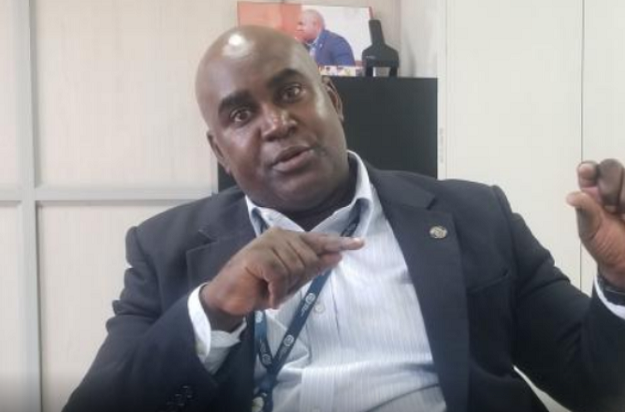
Further, Kibuuka says that the DRMS aims to improve tax revenue, the tax-to-GDP among other aspirations while maintaining a balance between the competing challenges.
“It will also address the issues of an enhanced fiscal-social contract, reducing informal economic activity, efficient tax policy development, effectiveness of existing taxes and improvements in revenue administration,” Ibrahim Bbossa notes.
This could be achieved through the implementation of the DRMS proposals like the design of a tax system, support for investment, enhancing the capacity of the tax administration, improving services and awareness for taxpayers among other initiatives.
“The Uganda Revenue Authority (URA) Tax Education Strategy is a support and facilitation arm of the DRMS; a productive workforce and population that understands its obligations therein,” adds Ibrahim Bbossa.
Therefore, across the various demography in Uganda the youth, formal, informal and general public segments, URA devises avenues of engaging through media, workshops, and online platforms among others. An engaged citizenry ultimately results in enhanced tax morale.
As noted in the DRMS this is the bedrock to Uganda’s middle-income status journey. URA would therefore develop a myriad of approaches to meet the needs of the various audience segments with a blend of both traditional and modern means of engagement. These planned initiatives are outlined in the URA Tax Education Strategy which sets the goals and guidance on the implementation of deliberate tax awareness interventions. Commissioner Ibrahim Bbossa Kibuuka pointed out.
Joachim Lubwama speaks out
On his side the URA station head, Masaka – Joachim Lubwama welcomed the participants to the workshop and emphasized the need for each stakeholder to play a part in mobilizing domestic revenue and welcoming the tax Education initiatives by URA.
Masaka Mayor
The area city lord mayor Masaka Namayanja Florence was grateful for the Tax Education sensitization approach taken by MOFPED and URA with the leadership.
She appreciated leaders for coming in unity to attend the workshop especially that focused on the bottom-top approach of engagement.

“E-payments is the new way of life and thus I encourage fellow leaders and city dwellers through their leaders to embrace the technological advancement, and I call on MOFPED/URA to increase on e-solutions education of the masses because it is a long journey to take with the taxpayers,” Mayor Namayanja pointed out.
She called for a good collaboration between URA and Masaka City Council/business community; URA can donate to the city Council trash bins as a Corporate Social Responsibility (CSR) which can go a long way in oiling operations the relationship between the two entities. Added Namayanja.
The Mayor appreciated one businessmen who in the spirit of keeping Masaka City organized and clean, paved the front area of his business adjoined to the road.
“We need to be able to negotiate with URA on tax issues because we also want to pay taxes,” Namayanja echoed.
Locals speak out
Kasumba Vincent, the chairman of Arcades Masaka city appreciated getting new URA station head. However, he noted that when a new manager or any staff is brought to Masaka City, URA office is supposed to introduce them to the area taxpayers.

He asked if on top of the tax collection mandate, URA could monitor their taxpayers’ business health.
“Can URA hold workshops for all the different tax heads without necessarily lumping up everything together? Also by segmenting to sensitize the different taxpayers’ categories? You need to separate the taxpayers to sensitize them according to their different needs for example the small and large taxpayers,” Kasumba said.
Kasumba suggested that URA should invite area MPs (law makers) to be part of the engagements especially in every area where the engagement takes place.
He noted his concern by posing a question as to why do URA clear goods at border entry only for UNBS to come and nullify quality of these same goods while on the shelves in shops.
Kasumba added further that: “URA needs to harmonise with UNBS. URA must make deliberate efforts to be seen and not just heard, in order to be appreciated-support sports in the area.”
According to Robert Wamala, an officer of URA, the taxman’s presence is being felt in Masaka City at the moment and vowed to share feedback with senior colleagues.
“Fortunately the mayor’s office is open for engagement. (On monitoring taxpayers’ business health) this was spot-on and to be followed through,” Wamala said.
On involving MPs, Wamala noted that was a good observation and to be considered since MPs play a very important oversight role as well as accounting to their constituents on policies they introduce/pass.
He said that for quality of products – UNBS would be invited in the next engagement to have a representative.
However, for locally produced goods, documentation of the said products is crucial if they do get certified and that one can prove authenticity when they face UNBS enforcement.
The engagement that was coupled with massive mobilization and local Radio talk shows had leaders unanimously appreciate the mode of engagement and agreed that there is need for wider and more sensitization workshops together with their constituents on a number of tax related matters, specifically the several tax heads.
The Masaka business community leaders, however, called for a more human face from the URA side as a way of smoothening the fragile relationship between the two parties, but also further appealed to government to bring services closer to the people.
It is also evident that publishing the DRMS/T.E.S will bring about transparency.