URA destroys 13,391 packages of assorted beverages, gins, kombucha & vodka seized over non-compliance
February 22, 2023
Armed robbers threaten Boda boda riders in Acholi Sub region amidst Museveni’s visit
February 24, 2023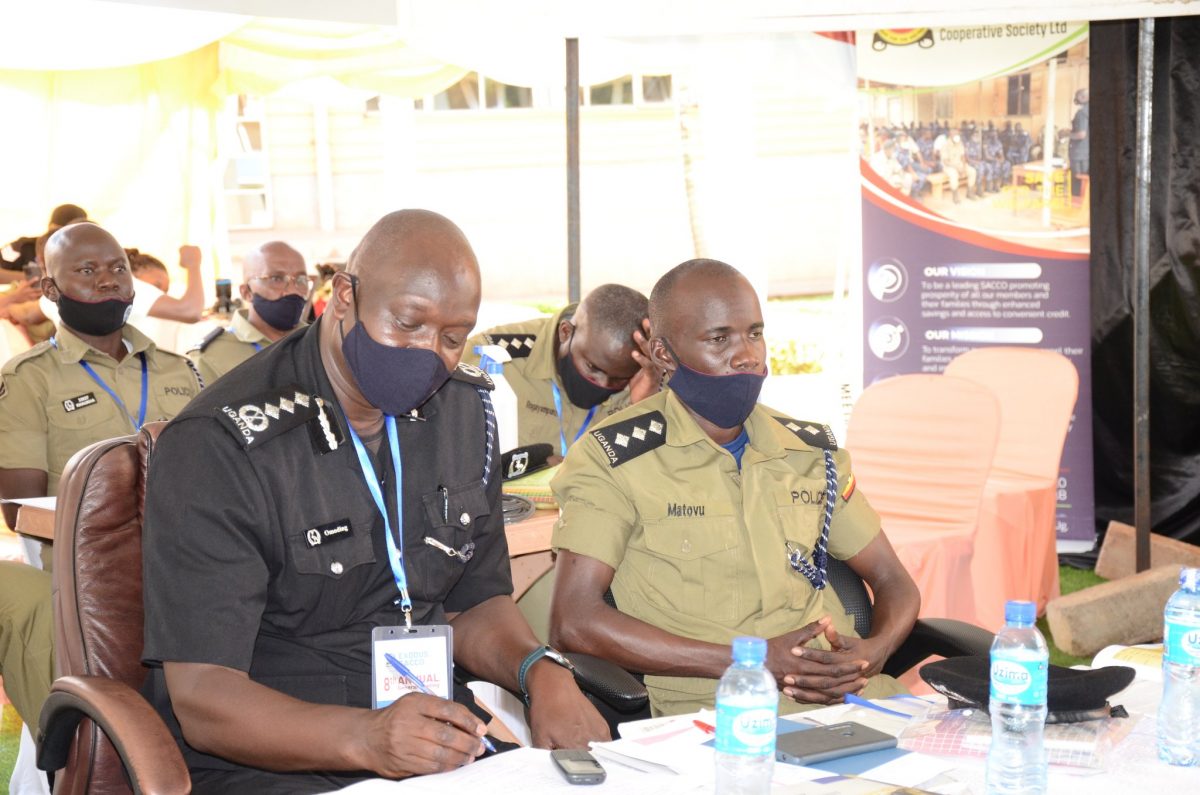
By Our Reporter
The leadership of Exodus SACCO on Tuesday appeared before Parliamentary Committee on Defense and Internal Affairs to respond to allegations of “fraudulent operations” of the SACCO.
The team was head by the Deputy Inspector General of Police, Maj. Gen. Geoffrey Katsigazi, and, Dr. Wilson Omoding, the Exodus SACCO Board Chairman
The Committee had earlier been directed by the Deputy Speaker of Parliament, Thomas Tayebwa to investigate alleged fraudulent operations of the SACCO. This followed reports from police officers who complained about compulsory monthly savings, challenges in accessing their savings, lack of representation of lower cadres at the Annual General Meetings (AGM), and others.
Importantly, the Exodus SACCO is a registered institutional cooperative society of the Uganda Police Force formed in 2007 by a resolution of the Police Council to enable its officers to come up with a pool of funds for purposes of accessing affordable loans to engage in productive activities.
Documents presented to the committee by the SACCO Board Chairman, Wilson Omoding indicate that the society boasts of 42,990 members who are personnel of the police, civilian staff, and employees of the SACCOs. The biggest number of members are Police Constables totaling 24, 695 (57.44 percent), followed by Senior Police Constables totaling 7,202 (16.75 percent).
As of December 2022, the SACCO had members’ savings totaling 29.93 billion Shillings, loans to members of 31.05 billion, total assets of 52.99 billion, the share capital of 9.19 billion, and a surplus of 3.71 billion.
Omoding told MPs that in 2020, the eighth Annual General Meeting of the SACCO resolved that each officer of a junior rank and senior rank make a minimum savings contribution of 30,000 and 50,000 Shillings, respectively per month in order to enhance the society’s capacity to provide affordable credit.
He said that savings are made through deductions from the police payroll and in other instances, deposits are made directly through the SACCO bank account.
“Members can withdraw part of their saved amounts from the SACCO to fulfill urgent needs and obligations. The amounts saved by the members can be used to meet loan requirements or as collateral when obtaining a loan. Members earn interest on their savings balance at the end of each financial year when a surplus has been declared,” said Omoding.
Omoding further explained that the eighth Annual General Meeting of the SACCO in 2020 resolved that members should be allowed to access part of their savings twice a year and that this was informed by a previously unclear policy which allowed often access to savings without control or regulation.
“The resolution however left the power to the board to regulate when during the year the member would be invited to apply for a savings withdrawal. Also, in order to be consistent with the core objective of the cooperative of coming together to create a pool of funds to provide affordable credit, the board was given the power to regulate the percentage of savings a member would be allowed to access,” Omoding added.
He further explained to the committee that the move was to ensure that the SACCO maintains its capacity to meet the ever-increasing loan demand from its members.
Omoding says that generally, the SACCO does not encourage members to make savings withdrawals and instead encourages them to apply for affordable loans. He however said that upon exit of any member after retirement, death, or those expelled, all accounts held with the SACCO are closed and money meant for a member is credited to their ordinary savings account on which they can be claimed by the member or their beneficiary.
Gen. David Muhoozi, the Minister of State for Internal Affairs who part of the delegation emphasized to the committee that the restriction of access to savings in the SACCO was informed by issues of liquidity and not any other ulterior motives.
The Deputy Inspector General of Police Maj. Gen. Geoffrey Katsigazi also explained that membership to the Exodus SACCO is voluntary, contrary to complaints by a section of police officers that they are forced to join the cooperative.
Dr. Omoding explained that every police station elects a delegate to form the Annual General Meeting of the SACCO. The supreme authority of the society is vested in the general meeting of members.
He said that the duties of the general meeting are the election of the board committee, receiving and consideration of the reports of the board, opinion of the supervisory Committee and external auditors, and giving directions through resolutions.
The General meeting derives powers from regulation 20 of the Cooperative Societies Regulations and Article 16 of the Exodus SACCO by-laws.
Omoding further put before the Committee SACCO’s achievements. These achievements include the opening and operationalization of 13 branches countrywide to enhance service delivery to members and improve on operational efficiency and that a share capital has steadily grown from 4 billion in 2017 to 9.2 billion in 2022. The SACCO has also built a savings culture through sensitization and as result increased member savings from 10.9 billion in 2017 to 29 billion and disbursed loans of over 75 billion to members from 2017.
According to Omoding, the SACCO loans have enabled the members to engage in productive activities that have created job opportunities in their communities. In the year 2020, Omoding told the Committee that the SACCO started payment of dividends on shares and interest on savings to members and provided support to members and communities under which we operate through corporate social responsibility programs.
Omoding also reported to the Committee that the SACCO membership grew to 42,990 members representing over 70% of the Uganda Police workforce. The SACCO also improved credibility of financial reports by subjecting annual reports to review by ICPAU (for Financial Reporting (FiRe) awards).
However, the above achievements also come with some challenges facing the SACCO.
For instance, Omoding told the Committee that the SACCO faces a growing demand for loans against savings deposits that are subjected to constant withdrawals, competition from other financial institutions i.e. commercial banks, other microfinance institutions and money lenders, Constant changes in technology, increase in the cost of doing business due to constant increase in the cost of living and post Covid-19 impact, and reputational risk due to poor publicity, harmful propaganda and negative attitude by some members.
However, he told the Committee that the SACCO management is committed to growing the society, building member confidence, and building a long-term foundation that will foster accountability and enhance economic value to all stakeholders.