DPC’s wife Thumps RDC
June 7, 2019
MPs, Finance ministry in standoff
June 7, 2019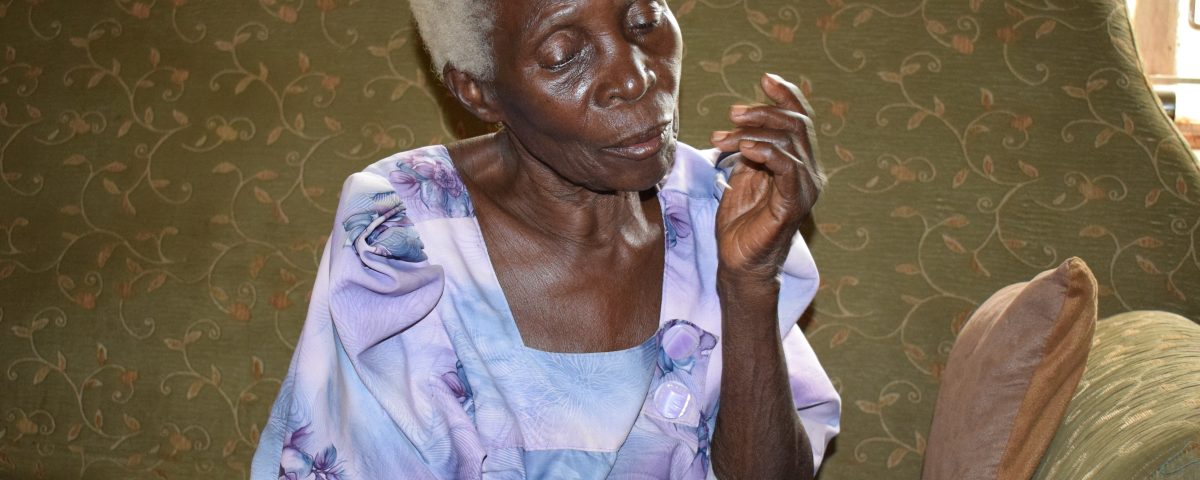
By Richard Kintu
At 87-years old, Geturida Nakabazzi is a household name in the shanty town of Nabweru on the outskirts of Kampala City. Here, she is highly revered by the young and old. You can hardly miss her especially if you inquire about her using Jajja Kalaala, her moniker.
“I was born Geturida Nakabazzi although most people know me as jajja Kalaala,” nakabazzi says as soon as I ask her as she ushers me into her house. Instantly, the neatly arranged old chairs signal to me that nakabazzi’s is a home that was once very powerful but is now being worn down by old age that is evident in its owner. In this sprawling building, nakabazzi satays with two of her daughter who look to be in their 60’s as well as another elderly women who seems to be just about a decade younger than her. That is my co-wife with whom I shared our husband before he died. We were four wives in this house and we were okay with it; unlike these young girls of today who are filled with jealousy,” nakabazzi reveals, much to my astonishment. After a brief wander into this interesting time, I officially tell nakabazzi I’m in her house so she can share with me what motivates her as the oldest runner of the Kabaka birthday run. But first, I beg to know a brief background about her.
“I was born to Yakobo Bawakanya of the Mutima Musagi clan and Erina Ndagire of the Fumbe clan. I can’t quite remember the year but I was raised at Nammengo village in Kyampisi-Kyabakadde then got married to my husband in 1947. I got my husband through my sister-in-law who was married at their village in Njagalabwami in Wobulenzi. We however relocated to Kampala and stayed in Mengo near the palace; after which a soldier sold us this land at Nabweru where we constructed and stayed until my husband’s death about six years ago,” she says. Switching to the marathon, nakabazzi says all the hustle she endures during these runs is worth it by all measure.
“I love the Kabaka deeply and it is this deep love that makes me stretch my aged body for his causes; he is my father, my God!” she says, quickly going on her knees in reverence for the Kabaka monarch. Overly amazed by her hysterical love for the Buganda king, I probe to know if there is any other thing. She then explains; “Unlike the others, the Kabaka has pure love for his people; it is natural and so I believe everything he does is well-intentioned. That is why when I heard the first call of running to aid fistula sufferers, I couldn’t stay back but pick up my aching bones to go and offer my personal contribution to his cry,” she adds.
Since the inaugural Airetl Uganda sponsored Kabaka Birthday Run, Nakabazzi says she has not missed a single event and vows that nothing can stop her from going to the next event.
Racing against hope
“This year’s event was the fourth marathon and hopefully I can run another one,” Nakabazzi says. She however admits that age is not on her side and as such, she could have run her last Kabaka’s marathon. As you see my health keeps deteriorating each passing day so I’m not sure I have much time left before I join my ancestors. That is why I decided to interest my great grandson, Bajunga Deus in this marathon. I’m confident he will carry on my spirit in the marathon when I’m gone,” she says.
My interaction with Nakabazzi showed that she is a very organized and intelligent woman; a thing she attributes to tutelage from her grandfather and later her father, Yakobo Bawakanya who died during the Obote 1 regime and now lies at her ancestral home in Nammengo village in Kyampisi-Kyabakadde, Mukono district. Today Nakabazzi is a retired traditional birth attendant but has very vivid memories of key events in her career. This is thanks to records that she recorded in books; some of which show have been kept for over 50 years. For instance, midway our interview, Nakabazzi excused herself to bring out her TBA tool kit. “This box was given to me by the late Vice President Dr. Samson Kisekka. He came one day and rallied all of us who had midwifery skills to go and get modern training. I went to the training and that is where he told us the importance of observing best hygiene standards to protect the lives of the mother, baby and the birth attendant. We were also taught how to keep records. Here is a book where I write all names of children that I have helped deliver,” Nakabazzi narrates. A quick perusal of the book shows that it has been kept since 1989 and has over 3000 names of babies as well as details of their parents. According to the book, clients who seek Nakabazzi’s services signed a declaration of consent before the birth and even sign again to affirm that the deliveries went on safely without complications.,
Nakabazzi confesses though that despite her retirement, women still flock her home for advice on deliveries. I always tempted to chase them away but many still insist, leaving me with no option.
Kabaka love roots
Although Jajja Kalaala says her love for the Kabaka is natural, she traces it to some nurturing. “My father served in Kabaka Cwa’s palace and was even a fighter in the religious wars. I remember because of that he was called Musajja wa Kabalega because he fought some wars in Bunyoro,” she says. She adds that her dad’s career meant that many times he would be away from home but each time he returned home he would have something good to carry for them. If you did something wrong, he would tell you you didn’t deserve going to the Kabaka while every good thing he gave us he would say it was from the Kabaka; so we grew up knowing that the Kabaka is the source of all good things,” she says.
Dying Wish
A staunch advocate for good health, Nakabazzi says she detests being idle and as such she keeps pacing up and about in her home. She is however disappointed that as she nears her grave she is aware that health care for the ordinary Ugandan is getting unattainable each passing day.
“The state of Kiruddu Hospital is deplorable and I have already warned my children never to take me there in my last hours. I would rather die in an area clinic or even at home Instead of going through the suffering I hear people lamenting about at Kiruddu. What hurts me is that Mulago (hospital) is now for the super rich and we the poor can hardly afford it yet it used to be our last resort,” Nakabazzi says, vividly remembering how she was able to deliver 7 of her 13 children from the national referral hospital. Given this state of affairs, Jajja Kalaala has two dying wishes. “I am happy that my king finally thought about our plight and themed his birthday runs around health. I however beg him to construct a hospital where his poor subjects can access cheap medical care. In case the Katikkiro embraces this drive I will die contented,” Nakabazzi says. In a parting shot, Nakabazzi reveals that much as her health is failing gradually due to age, her wish is to attend every edition of the Kabaka birthday run and then go with its memories to her final resting place when she passes on.
“I told my great grandson to start saving money for next year’s edition. I also told him that even if I will have lost my legs I should be carried in a wheel chair to the event so that I can see my king. As a souvenir for this year’s marathon, Nakabazzi picked a stone at Kabaka’s lake in Mengo and she has willed that it forms part of her grave. I want this stone to be embedded in my grave so that I keep the memory of my last marathon with me,” she says.