WHO declares new coronavirus outbreak a global health emergency
January 31, 2020
2019 UCE: Over 1,200results withheld as boys beat girls
January 31, 2020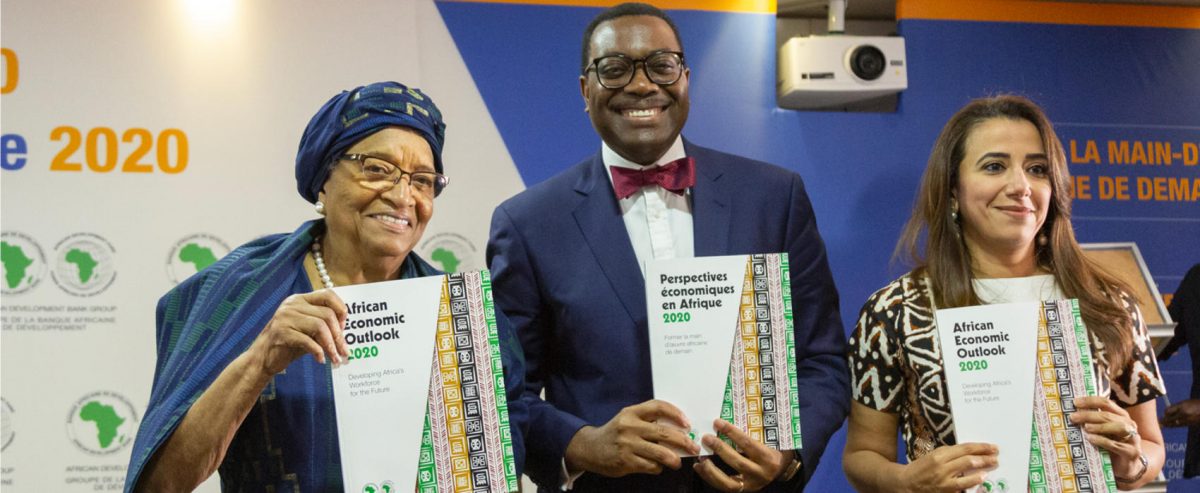
By George Mangula
East Africa maintained its lead as the continent’s fastest-growing region, with average growth estimated at 5.0 percent in 2019, according to Africa Economic Outlook (AEO) 2020.
According to the analysis, North
Africa was the second fastest, at 4.1 percent, while West Africa’s growth rose
to 3.7 percent in 2019, up from 3.4 percent the year before.
Central Africa grew at 3.2 percent in 2019, up from 2.7 percent in 2018, while
Southern Africa’s growth slowed considerably over the same period, from 1.2
percent to 0.7 percent, dragged down by the devastating cyclones Idai and
Kenneth.
The analysis shows that Africa’s economic growth remained stable in 2019 at 3.4
percent and is on course to pick up to 3.9 percent in 2020 and 4.1 percent in
2021, the African Development Bank’s 2020 African Economic Outlook (AEO) revealed
Thursday.
The slower than expected growth is partly due to the moderate expansion of the continent’s “big five” — Algeria, Egypt, Morocco, Nigeria, and South Africa, whose whose joint growth was an average rate of 3.1 percent, compared with the average of 4.0 percent for the rest of the continent.
The Bank’s flagship publication, published annually since 2003, provides headline numbers on Africa’s economic performance and outlook.
In 2019, for the first time in a
decade, investment expenditure, rather than consumption, accounted for over 50%
of GDP growth. This shift can help sustain and potentially accelerate future
growth in Africa, increase the continent’s current and future productive base,
while improving productivity of the workforce.
Overall, the forecast described the continent’s growth fundamentals as
improved, driven by a gradual shift toward investments and net exports, and
away from private consumption.
Urgent call to address Africa’s education, skills mismatch
The 2020 AEO, themed Developing Africa’s workforce for the future, calls
for swift action to address human capital development in African countries,
where the quantity and quality of human capital is much lower than in other
regions of the world.
The report also noted the urgent need for capacity building and offers several
policy recommendations, which include that states invest more in education and
infrastructure to reap the highest returns in long-term GDP growth. Developing
a demand-driven productive workforce to meet industry needs, is another
essential requirement.
“Africa needs to build skills in information and communication technology and
in science, technology, engineering, and mathematics. The Fourth Industrial
Revolution will place increasing demands on educational systems that are
producing graduates versed in these skills,” the report noted.
To keep the current level of unemployment constant, Africa needs to create 12
million jobs every year, according to the report. With rapid technological
change expected to disrupt labour markets further, it is urgent that countries
address fundamental bottlenecks to creating human capital, the report said.
“Youth unemployment must be given top priority. With 12 million graduates
entering the labour market each year and only 3 million of them getting jobs,
the mountain of youth unemployment is rising annually,” said Akinwumi Adesina,
African Development Bank President.
“Let’s look at the real lives beyond the statistics. Let’s hear their voices,
let’s feel their aspirations.”
Although many countries experienced strong growth indicators, relatively few
posted significant declines in extreme poverty and inequality, which remain
higher than in other regions of the world.
Essentially, inclusive growth — registering faster average consumption for the
poor and lower inequality between different population segments — occurred in
only 18 of 48 African countries with data.
“As we enter a new decade, the African Development Bank looks to our people. Africa
is blessed with resources but its future lies in its people…education is the
great equaliser. Only by developing our workforce will we make a dent in
poverty, close the income gap between rich and poor, and adopt new technologies
to create jobs in knowledge-intensive sectors,” said Hanan Morsy, Director of
the Macroeconomic Policy, Forecasting and Research Department at the Bank.
The AEO provides compelling up-to-date evidence and analytics to inform
and support African decision makers. The publication has built a strong profile
as a tool for economic intelligence, policy dialogue and operational
effectiveness.