


WHEN THE YOUNG LION OF NDEBERE SLEPT AND CHIEF ORACLE MISAGGA WATCHED
September 20, 2026President Museveni Hails Kyabazinga for Promoting Cultural Heritage, Norms, and Values.
September 20, 2026“VALUE ADDITION, AGRO-TOURISM TO DRIVE ECONOMIC TRANSFORMATION IN BUSOGA,” SAYS ALHAJI KIRUNDA
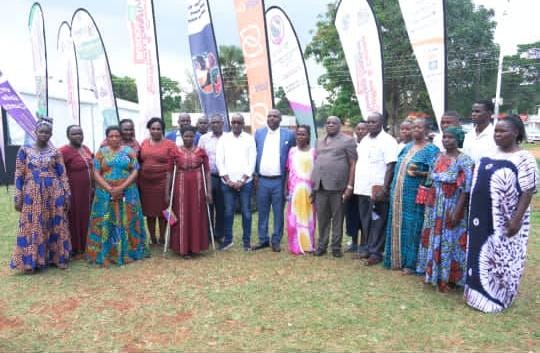
The Special Presidential Assistant–Press and Mobilisation and Deputy Press Secretary to H.E. the President, Alhaji Faruk Kirunda, has called for increased investment in coffee and cocoa value addition and agro-tourism to create jobs for young people, raise household incomes and accelerate economic transformation in Busoga.
He made the call in a keynote address delivered on his behalf by the Private Secretary in charge of Education and Skilling at State House, Mr. Jimmy Nambiro, during the inaugural Busoga Coffee and Cocoa Tourism Festival held at Jinja Showgrounds on Friday, September 18, 2026.
The three-day festival is being held under the theme, “Brewing Prosperity, Cultivating Heritage: Advancing Coffee & Cocoa Value Chains for Youth Employment and Economic Transformation in Busoga.”
Alhaji Kirunda said coffee and cocoa should not be viewed merely as agricultural commodities, but as complete value chains capable of supporting thousands of livelihoods and businesses.
“We should not look at coffee and cocoa merely as crops that are planted, harvested and sold. We should look at them as complete value chains capable of supporting thousands of livelihoods and businesses,” he said.
He noted that opportunities exist at every stage of the value chain, including production, aggregation, processing, transportation, packaging, branding and export. He said Uganda must move beyond exporting raw materials by increasing local processing and manufacturing so that farmers, entrepreneurs and communities can capture a greater share of the value generated from their products.
Alhaji Kirunda urged stakeholders to improve productivity and quality at farm level, strengthen post-harvest handling, expand local processing and develop products capable of competing in domestic, regional and international markets.
“How do we improve packaging, branding and standards? And, most importantly, how do we ensure that our farmers and local enterprises capture a greater share of the value created from the products they produce?” he asked. Youth at centre of value addition:
The Special Presidential Assistant said the development of coffee and cocoa value chains presents significant opportunities for Uganda’s young population, urging stakeholders to create pathways for young people to become producers, entrepreneurs, innovators, service providers and employers.
He said opportunities for young people extend beyond farming to processing, logistics, digital marketing, agricultural technology, packaging, hospitality, tourism and export services. He stressed the need to connect skills, finance, production, markets and mentorship if young people are to establish sustainable enterprises.
“Skills without access to markets, finance without viable business models and production without reliable buyers may not deliver the desired economic transformation,” he said. Alhaji Kirunda also called for greater economic participation of women, noting their significant contribution to agriculture, trade, food processing and household economies.
He urged stakeholders to strengthen women’s access to finance, productive assets and markets, as well as their ownership of enterprises and participation in economic decision-making. Agro-tourism as an economic opportunity:
On agro-tourism, the Special Presidential Assistant said Busoga’s agricultural, cultural and historical assets could be integrated to create new sources of income for communities. He said coffee and cocoa farms could be developed into tourism destinations where visitors learn about production and processing, taste locally produced products, purchase locally made goods and experience Busoga’s culture.
“When agriculture, culture, hospitality and tourism are connected, the economic value of the experience extends beyond the farm and creates opportunities for accommodation providers, restaurants, transport operators, guides, artisans, performers and other local businesses,” he said.
Alhaji Kirunda challenged stakeholders to focus not only on attracting tourists but also on ensuring that tourism generates tangible economic benefits for local communities. He said this could be measured by the number of local businesses benefiting from tourism, young people employed, local products purchased by visitors and farms and cultural experiences that become commercially viable.
The Special Presidential Assistant also emphasised the importance of market access and export readiness, noting that buyers require consistency, quality, traceability, reliable supply, appropriate packaging and credible businesses.
He said the festival provides an important platform for farmers, cooperatives, processors, exporters, investors, young people, women, tourism actors, financial institutions, development partners and Government agencies to establish productive linkages.
“The success of this festival should therefore not be judged only by attendance, visibility or the number of people who pass through the exhibition grounds. Its real success should be reflected in the relationships established, the businesses connected, the investments mobilised, the markets opened and the commitments that continue after the festival,” he said. He linked the festival to President Yoweri Kaguta Museveni’s emphasis on moving Ugandans from a subsistence way of life into the money economy.
He said Government programmes such as the Parish Development Model (PDM) and Emyooga are intended to support household production, enterprise development, access to finance, skills development and commercial agriculture. However, Alhaji Kirunda stressed that Government programmes alone cannot transform the economy.
“These programmes must meet organised communities, capable entrepreneurs, farmers who are willing to commercialise, financial institutions prepared to invest, private companies ready to create markets and young people who are prepared to take advantage of emerging opportunities,” he said.
He called for stronger collaboration among the Government, the private sector, financial institutions, development partners, farmers, cooperatives and cultural institutions to create an environment in which businesses can grow. He also urged stakeholders to integrate environmental sustainability into agricultural and tourism development, noting that land, soil, water, forests and wetlands form the productive foundation of the economy.
He challenged the organisers and partners to develop a practical follow-up agenda beyond the three-day festival. He said the impact of the festival should, within six months to one year, be reflected in strengthened enterprises, new markets for farmers, expanded women- and youth-led businesses, locally processed products, new tourism experiences and investments arising from connections made at the event.
Addressing the youth of Busoga, Alhaji Kirunda encouraged them to look beyond seeking employment and identify problems they can solve, products they can create, services they can provide and enterprises they can build. “Do not only ask where you can find employment. Ask what problem you can solve, what product you can create, what service you can provide and what enterprise you can build,” he said.
He commended the Women’s Environmental Forum Uganda, Busoga Kingdom and other partners for organising the festival, and specifically appreciated Ms. Resty Mbwali for working with the Office of the Special Presidential Assistant–Press and Mobilisation to organise the event. He said such platforms should help connect production to markets, innovation to finance, farmers to buyers and young people to economic opportunities.
“Let the conversations taking place here translate into partnerships and partnerships translate into businesses, jobs and income,” he said. Alhaji Kirunda further noted that coffee and cocoa could form part of a broader economic transformation agenda for Busoga by creating jobs, strengthening women’s economic participation, supporting farmers, attracting investment and developing tourism opportunities.
Youth urged to utilise land: Maj. Emma Kutesa from State House urged people in Busoga to make better use of available land by embracing high-value crops such as coffee and cocoa. He noted that many young people have migrated to urban areas while family land in rural areas remains underutilised.
“Most youth are now in towns yet they have land lying idle in villages. We need that manpower to develop our land,” Maj. Kutesa said. He called for a mindset change among the people of Busoga, saying the region has fertile soils that can support high-value commercial agriculture.
“Busoga has fertile soils which we can use to grow crops like coffee and cocoa. We should accept the fact that sugarcane growing on a small scale cannot help us fight poverty,” he said. Maj. Kutesa encouraged farmers to embrace President Museveni’s wealth creation messages, including the four-acre model, saying those who have implemented it have improved their livelihoods.
“The President emphasises the four-acre model. Those who have undertaken it are now doing well,” he said. Ms. Resty Mbwali, the organiser of the festival and head of the Women’s Environmental Forum Uganda, thanked the sponsors, led by the Office of the Special Presidential Assistant–Press and Mobilisation, for supporting the event.
“We also thank the Kingdom of Busoga for the support,” she said. Ms. Mbwali said the Women’s Environmental Forum Uganda promotes environmental conservation and livelihoods and seeks to help people in Busoga sustain their livelihoods through commercial agriculture and tourism. She said coffee and cocoa have the potential to contribute to poverty reduction in the region.
“Coffee and cocoa are high-value crops which can help Busoga to fight poverty. Currently, Busoga is in the 10th position when it comes to poverty, yet in the 1960s it was among the top three rich sub-regions in the country,” she said.
Ms. Mbwali said the festival brought together farmers, cooperatives, entrepreneurs, processors, exporters, investors, financial institutions, Government agencies, development partners and tourism actors to explore opportunities for wealth creation, value addition, employment, enterprise development and investment within Busoga’s coffee, cocoa and tourism economy.
The festival coordinator, Ms. Nababi Christine, commended partners for supporting the event. “We appreciate all our partners for allowing us to walk this journey with you. The Busoga Coffee and Cocoa Tourism Festival has started,” she said. Ms. Nababi said the festival was organised to promote tourism and agriculture in Busoga, noting that the region is naturally endowed but needs to diversify its economic base.
“People know Busoga because of sugarcane and rice, but we want to change that so that we are known for other lucrative products like coffee and cocoa, as well as agro-tourism,” she said. She said the organisers also aim to create employment opportunities and contribute to poverty reduction through the promotion of agro-tourism.
Mr. Kazibwe Michael of Kazibwe Mixed Farm in Busedde, Jinja District, one of the exhibitors, said he had used President Museveni’s four-acre model to benefit from commercial agriculture. He said his farm also undertakes value addition in coffee and cocoa, as well as utilising cow dung for productive purposes. Mr. Kazibwe advised parents to involve their children in agricultural ventures to ensure continuity and encourage the younger generation to embrace commercial agriculture.
