


ICT Ministry’s Past Procurement Inquiries Put Committee Retreat Back in Focus
October 12, 2026
EOC Turns to Digital Media to Bridge Public Awareness Gap on Equal Opportunities
October 15, 2026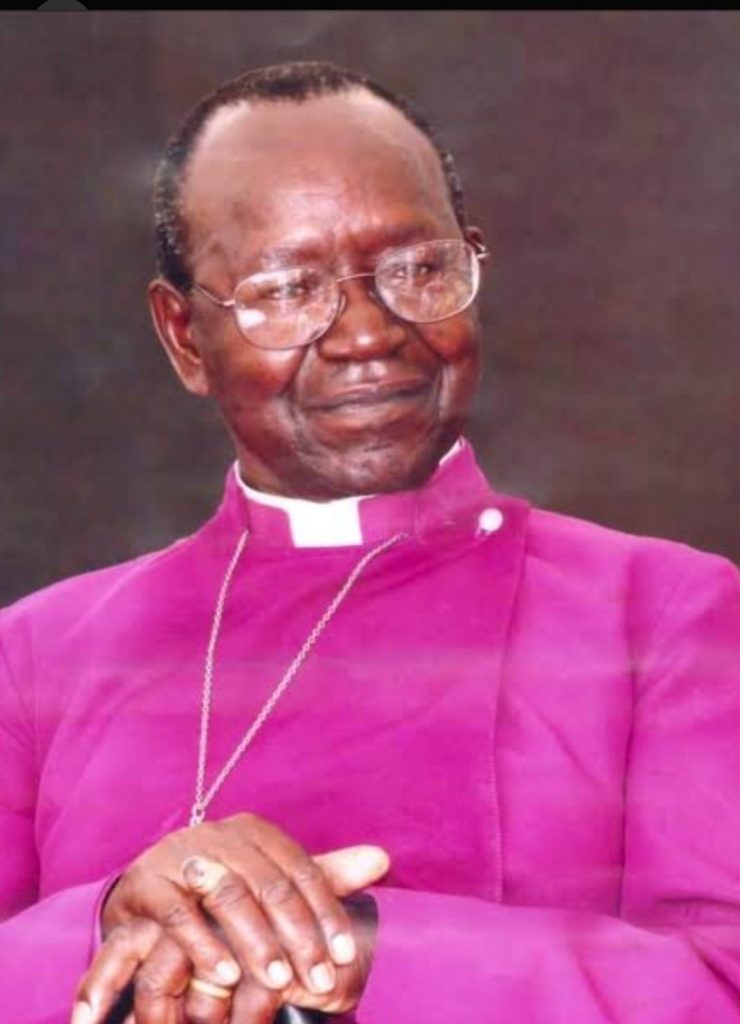
As Government commits Shs89.998 billion to establish a public university in
Busoga, the transition raises important questions about institutional identity,
historical recognition and the vision that inspired Busoga University.
JACQUILINE NDIKIMWIZA KAGGWA writes that the establishment of Iganga University marks a significant moment in Busoga’s quest for greater access to higher education. Yet, as Government moves to establish the new public institution, an important question deserves attention: how can Busoga embrace this new chapter without losing sight of the history and vision that gave birth to its predecessor, Busoga University?
At the heart of that history is the late Bishop Cyprian Kikunyi Bamwoze, whose vision of a university in Busoga was rooted in the belief that education could transform individuals, families and communities.
On October 6, 2026, the Government announced Cabinet’s approval of Iganga University, backed by an allocation of Shs89.998 billion for its establishment and operationalization.
The proposed institution will be based in Iganga and incorporate campuses inherited from the former Busoga University. Namasagali is expected to become a constituent college specializing in marine and fisheries studies.

For a region with a longstanding aspiration to expand access to university education, the announcement offers renewed hope. It promises opportunities for young people to pursue higher education closer to home, while potentially stimulating research, employment and economic activity.
However, the transition is about more than establishing a university, allocating public funds or choosing a new name. It is also about preserving an educational legacy, learning from past institutional challenges and ensuring that the new university delivers on the promise of quality education. To appreciate the significance of this development, it is important to understand where the journey began.
THE BISHOP WHO ENVISIONED A UNIVERSITY
Bishop Bamwoze, the pioneering Bishop of Busoga Diocese, believed that the Church had a responsibility to contribute to society beyond spiritual leadership. His development vision encompassed education, healthcare, poverty reduction and economic empowerment.
He understood that education was not merely a pathway to academic qualifications. It was a means of equipping people with knowledge, professional skills and the confidence to participate in the development of their communities.
Government records trace the origins of Busoga University to 1993, when the Board of Governors of Busoga College Mwiri, under Bishop Bamwoze’s leadership, resolved to establish a private university. The Busoga Diocesan Council and the House of Bishops subsequently became its foundation body.
The institution received a provisional licence and began admitting students in 1999. At a time when access to university education remained a challenge for many Ugandans, the establishment of a university in Busoga represented an important regional ambition. Students who might otherwise have struggled to access higher education elsewhere had the prospect of studying closer to their families and communities.
Beyond convenience, a university could help develop the professionals needed in schools, hospitals, businesses, public institutions and other sectors. It could also provide a platform for research into the challenges affecting the region. For Bishop Bamwoze, therefore, Busoga University was more than an academic institution. It represented an investment in the region’s human capital and future
prosperity. That founding vision remains relevant today. The real measure of a university is not simply the buildings it occupies or the number of students it enrols, but the knowledge it generates the quality of its graduates and the contribution it makes to society.

MAMA KADAGA’S PLACE IN THE UNIVERSITY’S HISTORY
The story of Busoga University is also linked to Rt. Hon. Rebecca Alitwala Kadaga, popularly known as Mama Kadaga, whose involvement dates back to the institution’s formative years. Historical accounts indicate that Bishop Bamwoze appointed Kadaga as the university’s first Council Chairperson before his retirement in 1998. This placed her within the institution’s early governance structure, at a time when its future was still being shaped. Her association with the university subsequently extended to efforts to secure Government intervention following its institutional challenges.
In 2021, Kadaga described the proposed Government takeover as a continuation of Bishop Bamwoze’s dream. Her position reflected the view that public ownership could provide the support needed to revive the institution and safeguard its contribution to higher education in Busoga.
Her connection to the university is significant because it spans both its early development and the later efforts to secure its future. As a regional leader who has held senior positions in Government, including Speaker of Parliament and First Deputy Prime Minister and Minister for East African Community Affairs, Kadaga has been associated with the broader question of how Busoga can secure greater educational and development opportunities.
The new university therefore presents an opportunity for regional leaders, including Mama Kadaga, to continue advocating for an institution that responds to the needs of the people it is intended to serve. Ultimately, the objective should go beyond preserving a historical association. It should be to ensure that the university offers credible academic programmes, produces competent graduates and contributes meaningfully to the region’s development.
THE CRISIS THAT THREATENED THE DREAM
Despite its promise, Busoga University encountered serious institutional challenges that eventually threatened its survival. In 2017, the National Council for Higher Education revoked its licence, citing regulatory concerns that included unqualified academic staff, unaccredited programmes and other
irregularities. The closure was a significant setback for an institution that had carried the hopes of a region for years. It also raised difficult questions about the protection of students, the continuity of academic programmes and the responsibilities of university managers.
The experience offers an important lesson about higher education: a compelling vision and community support is not enough to sustain a university. Institutions must also maintain academic standards, recruit appropriately qualified staff, manage finances responsibly and comply with regulatory requirements.
These safeguards are essential because students and their families invest considerable time, money and hope in university education. They deserve confidence that the qualifications they pursue will be recognized and that their learning environment meets the required standards.

Calls for Government intervention gained momentum as stakeholders sought a lasting solution.
In January 2018, President Yoweri Kaguta Museveni directed Government to begin the process of acquiring Busoga University and converting it into a public institution. A committee chaired by the then State Minister for Higher Education, John Chrysostom Muyingo was established to guide the process.
However, the journey was lengthy.
Bishop Bamwoze died in February 2019, before the takeover was completed. He did not live to witness the transition of the institution he had helped establish. His death marked the end of his personal journey with the university, but the questions surrounding its future remained unresolved.
THE 2024 HANDOVER: A TURNING POINT.
A major milestone came in December 2024, when the Church of Uganda formally handed over Busoga University to the Ministry of Education and Sports. The transfer included a land title covering 215.4 acres and documentation relating to the institution’s assets and liabilities. First Lady and Minister of Education and Sports Janet Museveni subsequently handed responsibility for the assets to an interim task force chaired by Professor John Robert Stephen Tabuti.
The handover marked an important stage in the effort to establish a sustainable public institution from the foundations of the former university. For the Government, the transition created an opportunity to put the institution on a firmer financial and administrative footing. For the Church of Uganda, it marked the transfer of responsibility after years of involvement in the university’s development. For the people of Busoga, it offered renewed hope that the dream of a functioning university would finally be realized. Yet a transfer of ownership does not automatically resolve every question surrounding an institution. Legal status, assets, liabilities, academic programmes, governance arrangements and regulatory approval all require careful attention. The handover also brought a longstanding question into sharper focus: what should happen to the name and identity of the institution that had existed before the Government
took over?
THE NAME DEBATE: MORE THAN A QUESTION OF IDENTITY
For many Basoga, retaining the name Busoga University appeared to be a natural way
of preserving the institution’s history. The name was associated with Bishop Bamwoze’s vision, the contribution of the Church of Uganda and the region’s longstanding demand for a university. It had become part of Busoga’s educational story.
However, Government and the National Council for Higher Education raised concerns about retaining the name, citing possible legal, regulatory and reputational complications linked to the former institution.
Alternative names were considered, including Kiira University, prompting debate about whether institutional renewal should preserve the original identity or establish a new one. On August 27, 2026, Speaker of Parliament Jacob Markson Oboth advised the Government to retain the name Busoga University and called for broader consultation.
The debate exposed a broader issue that goes beyond Busoga: when an institution changes ownership or is re-established after a crisis, how should its history be treated? There are legitimate considerations on both sides. Government must establish a legally sound institution that complies with the relevant regulatory requirements and can operate sustainably. At the same time, the contributions of the original founders, the Church and the community should not disappear from the historical record simply
because the institution’s ownership or name changes. Institutional identity is not determined by a name alone. It is also reflected in an institution’s founding purpose, traditions, public contribution and relationship with the community it serves.
If Iganga University proceeds under a new identity, it can still acknowledge Busoga University as part of its institutional heritage, provided the historical relationship is accurately documented and appropriately recognized. The objective should be to resolve the legal and administrative questions without turning
the transition into a choice between the future and the past.
IGANGA UNIVERSITY: WHAT DOES THE INVESTMENT MEAN FOR BUSOGA?
Cabinet’s approval of Iganga University on October 5, 2026, announced the following day, marks a significant step towards establishing a public university in the Busoga sub- region. The Shs89.998 billion allocation is intended to support the institution’s establishment and operationalization. The Ministry of Education and Sports was directed to work with the Ministry of Justice and Constitutional Affairs to prepare the necessary legal instrument, after which the education minister is expected to seek Parliament’s approval. The proposed institution has the potential to contribute to Busoga’s development in several ways, but those benefits will depend on how the university is planned, funded and managed.
First, access to higher education. A functioning public university in Iganga could provide more young people with opportunities to pursue degree programmes without having to travel far from home. This could reduce some of the accommodation, transport and living expenses associated with studying in distant towns, although tuition and other costs would still need to be considered.
Second, employment and economic activity. A university requires lecturers, researchers, administrators, technical staff and support workers. Students and staff also create demand for housing, food, transport, printing, retail services and other businesses. If properly managed, these activities would stimulate the local economy. Third, research and innovation. Universities are expected to generate knowledge that
addresses real-world challenges. In a region where agriculture is an important economic activity, research into agricultural science, agribusiness, food systems and related disciplines could help farmers and entrepreneurs improve productivity and create value from their produce.
Fourth, specialised training. The proposed designation of Namasagali as a constituent college specialising in marine and fisheries studies could open opportunities in fisheries, aquaculture and aquatic resource management. Such programmes could support skills development and research relevant to Uganda’s fisheries sector, subject to appropriate academic planning and investment. Finally, regional development. A university can become a centre for intellectual exchange, professional training and partnerships among Government, businesses, civil society and communities. Its impact can extend beyond the classroom when research and expertise are directed towards local needs.
However, the Shs89.998 billion commitment should be understood as a starting point
rather than a guarantee of success. The public will need to see how the money is allocated, what infrastructure and academic programmes it supports, how the institution will be governed and what
mechanisms will ensure accountability. A university is a long-term public investment. Beyond its initial establishment, it requires sustainable funding for salaries, laboratories, libraries, teaching materials, research, student services and infrastructure maintenance.
The real measure of success will therefore be whether Iganga University can offer quality education, produce competent graduates and remain financially and academically sustainable over time.
PRESERVING BISHOP BAMWOZE’S LEGACY
As Iganga University takes shape, preserving the history of Busoga University should be treated as part of the transition, not as an afterthought. Bishop Bamwoze deserves recognition for his role in advancing the original vision. The contributions of the Church of Uganda, the late Kyabazinga Henry Wako Muloki and
Other regional leaders should also be documented. Mama Kadaga’s involvement in the university’s early governance and her subsequent advocacy for Government intervention form another important part of this history. One practical step would be to develop an institutional archive containing historical
documents, photographs, records of key decisions and accounts from people who participated in the university’s establishment and development.
The university could also commission a properly researched institutional history, organise public lectures and establish a memorial programme, scholarship or building in honour of Bishop Bamwoze.
Such initiatives would help students, researchers and future generations understand the circumstances in which Busoga University was established, the people who contributed to its development and the challenges that eventually threatened its survival.
Importantly, preserving the legacy should not mean romanticising the past or overlooking the failures that led to the former university’s closure. A meaningful legacy combines recognition with lessons for the future. The new institution should honour the founding vision while ensuring that the governance, academic standards and financial accountability that proved so important in the former university’s history is never compromised.
A New University Must Deliver a New Standard
The establishment of Iganga University offers Government an opportunity to turn a longstanding regional aspiration into a sustainable public institution. But the success of this undertaking will depend on decisions made now. Government must ensure that the necessary legal and regulatory processes are completed, public funds are used transparently and the university has a clear strategy for academic development. University leaders must build a culture of accountability, recruit qualified staff and ensure that academic programmes respond to the needs of students and the wider economy.
Regional leaders and community stakeholders also have a role to play. Their responsibility is not simply to advocate for a university or debate its name, but to help create an environment in which the institution can thrive. Parents and students, meanwhile, will rightly expect an institution that offers credible qualifications, relevant skills and a genuine pathway to employment, entrepreneurship and further learning. The transition should also provide an opportunity to engage young people and employers in determining which programmes are most relevant to the region’s future. A university should not exist merely because a region deserves one. It should exist to deliver measurable educational, social and economic value. That is the standard against which Iganga University should ultimately be judged.
The Legacy Must Outlive the Name
For Busoga, the emergence of Iganga University is an opportunity to look forward without forgetting the journey that made it possible. For the Government, the task is to turn its financial commitment into a credible and sustainable public institution.
For regional leaders, including Mama Kadaga, the challenge is to ensure that the university serves the interests of the people and remains responsive to the region’s educational needs. For the Church of Uganda and the wider community, preserving the history of Busoga University is an opportunity to ensure that the contributions and sacrifices of those who pioneered the institution are not lost.
And for the university itself, the responsibility will be to uphold the highest standards of teaching, research, governance and public service. Bishop Bamwoze’s legacy should not be measured solely by whether the institution retains the name Busoga University. It should also be measured by whether the vision that inspired its creation continues to transform lives. Before there was a government-backed university, there was a vision. Before the allocation of billions of shillings, there was a commitment to education. And before Iganga University became a matter of national policy, Busoga University was a regional dream.
That dream now has an opportunity for a new beginning. The responsibility is to ensure that the new institution learns from the past, serves the present and prepares future generations for the challenges ahead.

The name may change, but the legacy of Bishop Bamwoze must endure.
The writer is a media consultant
0783267987/0783267987
