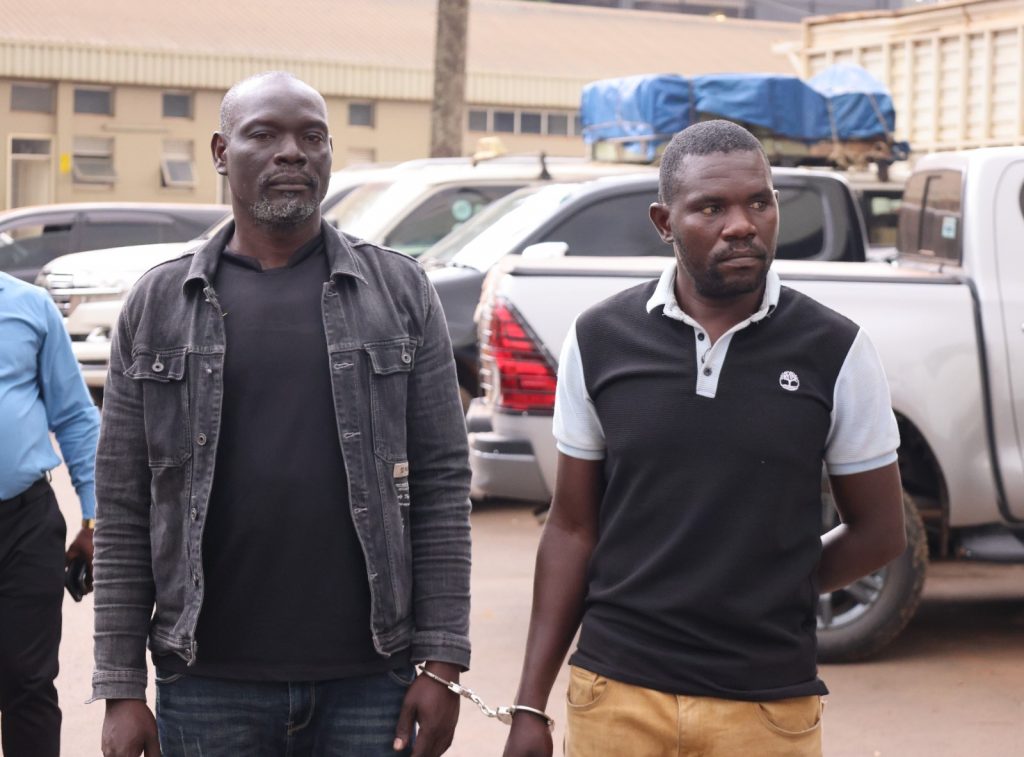
I won’t negotiate with Museveni to free our people – Bobi Wine
May 1, 2021
21 presidents invited for Museveni inauguration
May 5, 2021
By Our Reporter
The Ministry of Internal Affairs lists securing the just concluded 2021 general polls among key achievements in the period 2016-2021.
This, the ministry says was done amidst Covid-19 and underfunding challenges.
Gen. Jeje Odong, made this remark as he addressed an audience at the Office of the Prime Minister in Kampala on Tuesday on the NRM manifesto 2016-2021,
Gen. Odong’s ministry oversees the operations of the Uganda Police Force, Uganda Prisons Service, The National Bureau for Non-Government Organizations, National Identification and Registration Authority, Directorate of Citizenship & Immigration Control, Directorate of Government Analytical Laboratories (DGAL) and Ministry of Internal Affairs (MoIA) Headquarters form the key dockets under the Ministry of Internal Affairs.
Other achievements include; full implementation of e-immigration system which has facilitated the electronic issuance of visas, permits and passes; personalized services of visas that can now be accessed at Uganda’s 17 missions; EAC e-Passports facility operationalized; Established an automated Border Control Management System under the e-immigration system; Installed electronic-gates at Entebbe International Airport for faster clearance of travelers; Installed an Automated Border Management system capable of tracking entry and stay of persons in the country; Recruited and trained 6,065 warders & wardresses, 129 Cadet Principal Officers and 170 Cadet ASPs; Strengthened the Prisons SACCO and increased membership from 6,874 to 10,271 members representing 94.2% of staff with an asset base, UGX 7.02bn; Piloted irrigation scheme at Bulaula Prison farm to mitigate effects of drought on 150 acres; Integrated NIRA services with the following entities; URSB, DCIC, MoPS, URA, MoES, NSSF, MoLHUD, UCC & EC; put up infrastructure for implementation of Third Party Interfaces (TPI)has been fully established and functional; 60 entities accessed the National Identification Register either through TPI or manually; acquired genetic Analyzer for DNA analysis; automated Ballistics Information System for Ballistics and Gun analysis; acquired video Spectral Comparator 8000 equipment for Questioned Document analysis and bullet Recovery System to assist in the forensic investigations; Increased police staff strength by 10,000 additional personnel thereby increasing the strength to 52,775 personnel. This has improved police to population ratio from 1:941 to 1:812; Built capacity of 11,000 in-service personnel through refresher and specialized training in various disciplines including Executive leadership, Strategic Command and Leadership programs, NCOs Course, advanced training in Criminal Investigations, Forensics, Canine, Marine, Fire, Field Force Unit, Counter Terror, Medical, Air wing, etc and established a Police Senior Command and Staff College at Bwebajja and continued with infrastructural developments in Police Training Schools at Kabalye, Ikafe and Olilim.
Gen. Odong says the ministry scored 90% achievement of the 2016-2021 NRM manifesto and is hopeful of full achievement of the manifesto 2021-2026.
He says the ministry still has challenges with the ever changing dimension of crime- especially urban murders, drug and human trafficking, cyber crimes, proliferation of small arms and light weapons, and kidnaps. Others are; Infrastructural challenges: Short fall of staff accommodation, office space, overcrowding of facilities especially in prisons; unresolved border demarcations between Uganda and its neighbors including the porous borders (336 illegal routes that immigrants use to cross into the country); limited coverage and inter connectivity of electronic systems; adequate human resource across the Ministry institutions given the mandate and lack of a business continuity solution/system for all institutions under the Ministry among other challenges.
Gen. Odong says some areas in the 2016-2021 manifesto were not met.
These are; Increased community policing which promotes citizens’ participation in ensuring their security, Decongestion of prisons through expansion of existing facilities and use of alternative sentencing options; Continued registration of citizens for issuance of national identification cards as well registration of resident aliens and Operationalization of the Regional Forensic Laboratories to bring services and administration of justice closer to the people among others.