


Minister Nyamutoro Launches PanAfrica Geo Program To Enhance Mineral Exploration in Uganda
October 1, 2025Government Dismisses Mayatsa Election, Calls It Sham, Illegal and Can’t Recognize him as IV Umukuka:
October 1, 2025
KAMPALA – Teachers from some of Uganda’s highest malaria-burden districts have been empowered as key agents in the fight against the disease following a high-level orientation held at the Ministry of Health Command Center. The training aimed at equipping educators to spearhead malaria prevention and control efforts within their schools and communities.

The meeting, which brought together Children’s Voices Against Malaria (CVAM)-focused teachers from Bugiri, Tororo, Mbale, Kampala, Adjumani, Arua and Mukono among others It served as a crucial preparatory step for the National Children’s Parliament on Malaria, scheduled for 20th November 2025 at the Parliament of Uganda, ahead of International Children’s Day.
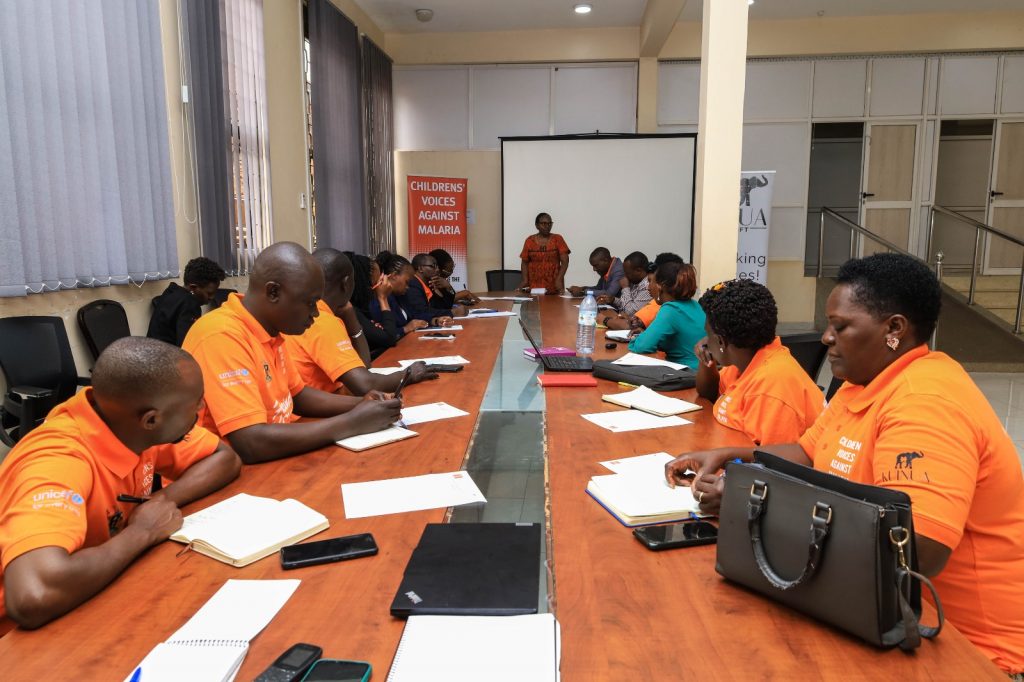
Presiding over the session, Dr. Jane Nabakooza, Head of Malaria Chemoprevention at the Ministry of Health’s National Malaria Elimination Division (NMED), praised the teachers as “the best agents of change to raise the CVAM agenda”. She emphasized their daily interaction with a significant number of school-going children as a powerful tool for driving behavioral change.

Addressing the urgent need for action, Dr. Nabakooza highlighted Uganda’s dire malaria statistics, noting the country’s ranking as third globally in malaria deaths. She described this as a statistic that “calls for urgent multi-sectoral action” to reverse the trend.
The orientation, organized by CVAM in partnership with the Ministry of Health and KINUA with support from UNICEF, focused on several key objectives:

- Raising awareness of the malaria burden and its effects on students and pupils.
- Empowering teachers to lead prevention initiatives within schools and communities.
- Strengthening collaboration between the education and health sectors to accelerate malaria elimination by 2030.

In response, the participating teachers expressed their readiness to lead behavior-change campaigns and presented a set of recommendations, including:
- Integrating malaria education into the school curriculum for consistent awareness.
- Increasing the distribution of treated mosquito nets in schools and communities.
- Implementing regular school-based health talks and screening programs for early detection.
- Forging stronger partnerships with local health facilities to support timely case management and data sharing.
- Advocating for continuous capacity-building to keep teachers updated on malaria control strategies.
The upcoming National Children’s Parliament will further amplify this message by empowering children as agents of change and influencers of public health policy. It underscores the collaborative, multi-level effort required to eliminate malaria across the country.
