JOBS SLOT: Jobs at NMG, Mildway, NURI, Opportunity Bank, Civil Aviation, UNCST, Few Net, Law Reform, University Research, WFP, UN, Kakira Sugar and more……
October 18, 2019
City tycoon shot dead in Kampala
October 19, 2019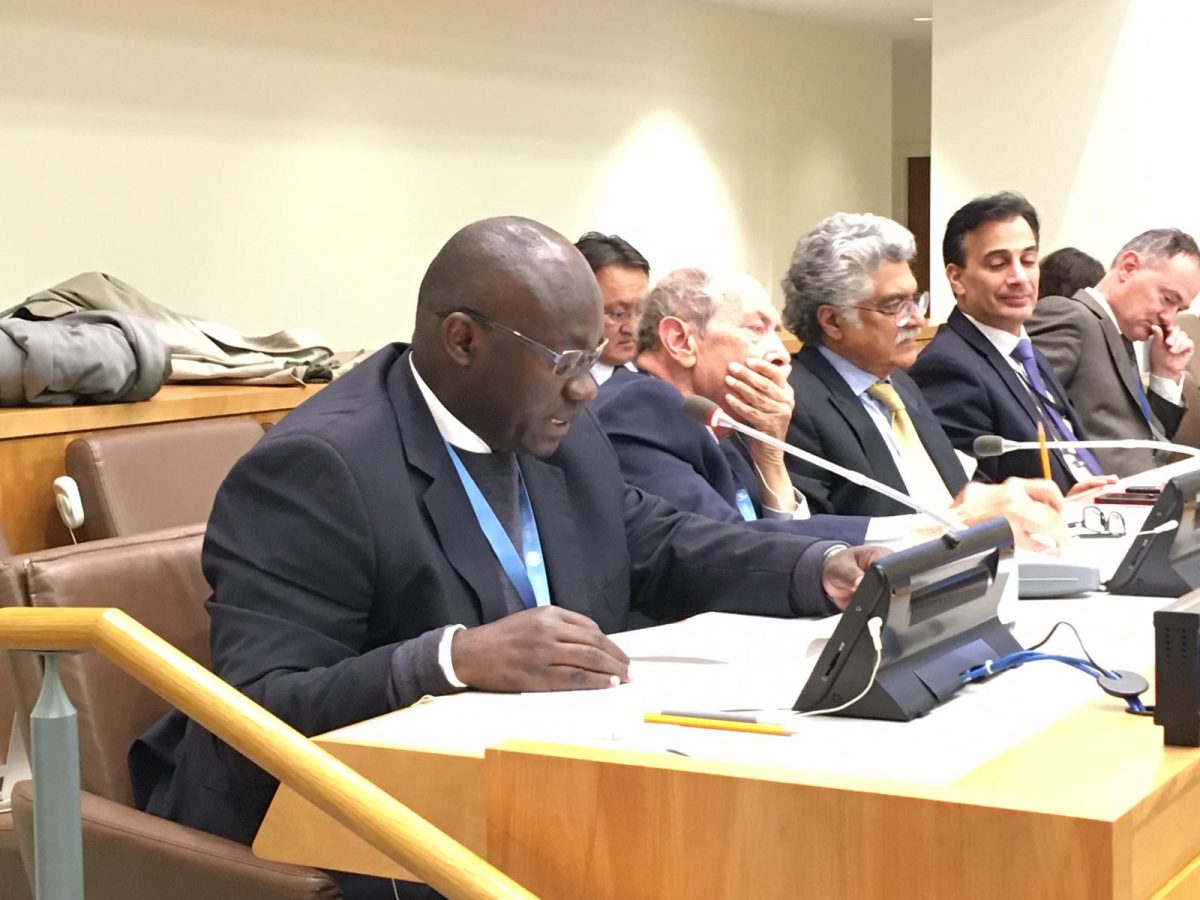
By Francis Otucu
Uganda has an immense opportunity to take advantage of global governance forums to coordinate its foreign policy.
The UN Independent Expert on the promotion of a democratic and equitable international order, Dr. Livingstone Sewanyana in his second report to the 22nd session of the Third Committee of the UN General Assembly, at the UN headquarters, New York, USA Friday, October 18, 2019 made the case for countries across the globe.
“Increased participation in global governance would promote accountability and good governance because global spaces give an opportunity to countries to learn from others and adopt mechanisms that have been tried and tested across the globe,” he said.
Uganda is one of the 44 landlocked countries in the world, but global spaces give the country an opportunity to market its human resource and build lucrative businesses. “Increasing the presence of Ugandan actors in global spaces would help Uganda build the critical human capital that would drive societal transformation’” he said.
Global Governance space are an important framework for setting the world order. Global Governance spaces include the Economic Forum, G7 and G20 among others. Uganda can take advantage of some of these global governance forums to co-ordinate the country’s foreign policy on trade. “Uganda can expand its trade and foreign trade opportunities and also protect its interests by increasing the presence of citizens and civil society groups in global spaces,” he said.
Civil society groups play a critical role in the development and growth of Uganda and yet specific procedures or forums for civil society participation in the group of 77 or G20 or the movement of non-aligned countries is minimal and at times non-existent.
The citizens and civil society can participate in the areas of business, labour, finance and the academia. This would help countries like Uganda set global economic priorities and have coordinated responses to the transnational challenges such as refugees, fair trade, global peace and security, climate change, terrorism and corruption only then would citizens of countries across the globe benefit meaningfully from the global governance spaces.