


PRESIDENT MUSEVENI, TANZANIA’S SULUHU LAUNCH $30M VEHICLE ASSEMBLY PLANT IN MPIGI
November 20, 2026
Children Lead as Science, Public and Private Sector Share Stage at Malaria Heroes Awards
November 20, 2026Wrong advise!!! Nabbanja to resettle landslides threatened Bagisu with pocket change and provided no compensation for their land taken over by Uganda Wild Life Authority?
Why are Ugandans in the habit of resisting every government proposal to relocate them to other areas. History suggests it does not matter whether they were occupying private or public land. Well, the answer lies with past events where the government gave different reasons for relocating residents only to use their land for different purpose aimed at enriching government officials or their proxies.
One of such incidents was when the Government of Uganda in June 2007 singled out a huge prime land otherwise known as Naguru-Nakawa Housing estate in Kampala. The occupants were given a false assurance that the government had identified an investor to develop the land and would give them the first priority to buy subsidized housing units.
The majority of the 1,747 residents occupying those quarters were from west Nile and northern Uganda. Excited by the development, the now former sitting tenants signed agreements with some voluntarily handing over their houses while others were forcefully evicted. Years down the road, the Nakawa side has a private Agha Khan university while the Naguru side is occupied by well-connected individuals in this government including a church.
The same thing happened when several people were evicted from Nsambya estate now housing several private investments. It is such dirty schemes to mention but a few that have scared off other potential victims. At the peak of the plan to resettle the Bugisu, there was a speculation that some minerals were discovered in the slopes of Mount Elgon while others believe the land could be used to grow coffee to feed a certain coffee factory in the western Uganda.
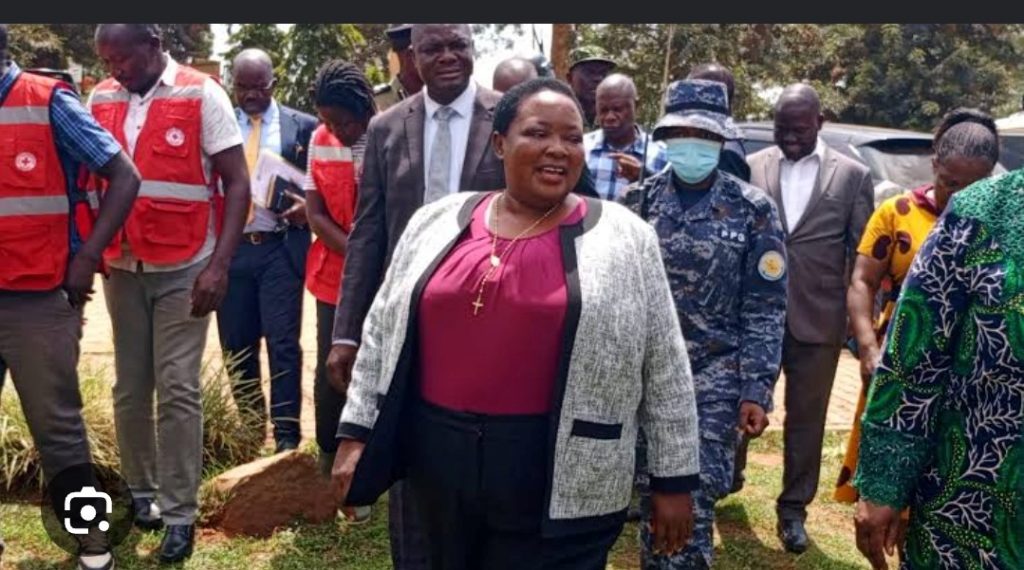
As opposed to coming up with a comprehensive integrated disaster management framework, the Prime Minister Robinah Nabbanja went to Bugisu with one thing at the back of her mind, “you either leave peacefully or you leave by force”. I guess she had forgotten that she was dealing with battle hardened people who have always protected their land with their lives.
While the government argues it is a practical, life-saving scheme, residents, local leaders, and cultural authorities warn that it falls short of covering the actual costs of buying land, building a home, and rebuilding lost livelihoods. Residents argue that a one-off cash payout does not replace the long-term income generated by productive fertile land that they have occupied for generations.
Robinah Nabbanja maintains that the primary goal of the resettlement program is to immediately move over 13,000 vulnerable households off steep slopes (32 degrees and above) to prevent further loss of life ahead of heavy rains. She argued that buying land for centralized camps as was the case in the first phase in Bulambuli District has proved slow and difficult.
For this reason, the government has authorized direct cash transfers of 18 million per family to allow them to quickly choose and buy land elsewhere. The Prime Minister argues that when well managed, that one off package is enough to acquire a smaller plot and invest in fast-maturing crops to restart livelihood. This is what many have termed a polite insult by the Prime Minister.
Beyond the pocket change offer, the prime minister also gave conditions that beneficiaries must sign consent-to-transfer forms handing their land over to UWA for conservation and tree planting. I thought this was a statutory mandate of the National Forestry Authority. In Bugisu, when something hisses like a snake, crawls like a snake and looks like a snake, it can only be a snake. Why do I think that signing a transfer form in whichever form it is packaged amounts to relinquishing their rights over their land.
Then there are strict timelines with a deadline of end of December 2026, a time when rains would have subsidized or when there are no rains at all. This is red flag number two. Above all, families have been permitted to harvest their current crops, demolish their houses, and vacate designated danger zones.
Where does this leave their investments like eucalyptus, fruit trees, matooke and coffee? Now Leaders in Bugisu are facing intense pressure from the local communities over their actions or inactions over the Government’s decision to offer them peanuts. The prime Minister who headed the delegation to mbale avoided any discussion regarding compensation and emphasized that the resettlement package was uniform for all families irrespective of the investments on ground and the size of land they owned in the landslides prone areas.
The villagers are aware of the dangers paused by landslide and were also willing to receive the pocket change resettlement package. They however wanted an assurance that they would retain ownership of their land and use the same for only farming. Many are now swearing over their own dead bodies that they will not accept the pay and will not vacate.
Since time immemorial, families on the slopes of Mount Elgon have accumulated land, buried their loved ones, established investments and built livelihoods for posterity. Government however insists the slopes of Mount Elgon are no longer safe due to rampant landslides endangering the safety of humans, animal, homes and investment such as food and cash crops.
The attitude of the Prime Minister raises questions about the extent of consultation and stakeholder engagement before rolling out programs that affect mwanaichi. I believe government should have come up with a phased compensation plan irrespective of the threats paused by the landslides. It is more or less a compulsory acquisition of land whose parameters are already codified within the laws of Uganda. What is at stake is to prioritize between protecting lives and the land that has sustained the communities on the slopes of Mount Elgon for generations. Torn between the demand for compensation for the land and the government’s duty to protect lives, battles lines have been drawn and if Bugisu votes still matter to this government, I know who will emerge victorious.

Wadada Rogers is a commentator on political, legal and social issues. wadroger@yahoo.ca
