Armed Robbers Arrested In Fire Exchange
January 30, 2019
Assorted beans trading fast in major markets as maize price declines
January 30, 2019
By George Mangula
Uganda will soon have a new Fisheries and Aquaculture law, if the Fisheries and Aquaculture Bill, 2018, is reviewed and approved by Cabinet and Parliament.
The proposed law is a revision of the Fish Act of 2000 Cap 197, which only regulates capture fish and does not address aquaculture activities such as management of commercial fishing, fish selling, post-harvest handling, fish transportation, surveillance and control monitoring of fisheries units as well as fisheries research.
The proposed Bill is part of efforts by the Ministry of Agriculture Animal Industry and Fisheries (MAAIF) to provide an enabling policy and regulatory framework for the stakeholders engaged in fisheries and aquaculture activities.
The fisheries and aquaculture sub-sectors contribute significantly to Uganda’s national economic growth, development as well as food and nutrition. Uganda has one of the largest fresh water resources in the world with almost 20 percent of its surface area covered with water. This expansive water resource has supported fisheries sector, enabling both capture and farmed fisheries since 1920s.
Experts say that while fisheries contributes 12 percent of agricultural GDP of Uganda and supplies 50 percent of animal proteins consumed in the country, a number of challenges, which seriously affect the economic and social contribution of fisheries and aquaculture, cripple the vibrancy of the sub-sector.
Some of the challenges the experts mention include; over fishing caused by increasing demand due to population growth, use of illegal fishing gear, poor quality of fish seeds, limited access to fish seeds and feeds, as well as continued trade in illegal and unrecorded immature fish hence costing the country about US$429 million (about Shs1.6 trillion ) in income lost.
The proposed Fisheries and Aquaculture Bill, will therefore help to address some of these challenges and foster a sustainable fisheries and aquaculture sub-sector. As part of the review process of the proposed Bill, MAAIF and FAO, through the Food and Nutrition Security Impact, Resilience, Sustainability and Transformation (FIRST) Project, have organized a National Validation Workshop to deliberate on the imminent Bill.
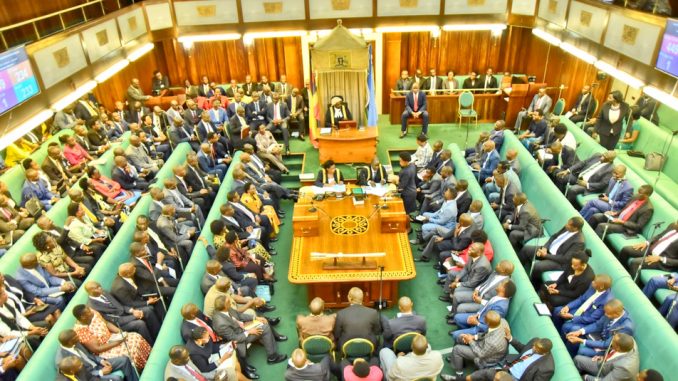
Participants who include key stakeholders in the sector have reviewed the current version of the draft Bill, validated it and produced a final version of the Draft Fisheries and Aquaculture Bill, 2018, that will subsequently be sent to cabinet for approval.
There have also been regional and country-wide consultations that generated views from relevant regional and local government stakeholders, on the proposed Bill.
Agriculture Minister Vincent Sempijja commended FAO and other stakeholders for prioritizing the fisheries and aquaculture sub-sectors and promoting relevant laws to ensure sustainability.
“While the Fish Act, Cap 197, provides for the control of fishing, fish conservation, purchase, sale, marketing, processing of fish, it is now outdated to address current technological advancement and the changed fisheries sector,” he said.
He said that “The Fisheries and Aquaculture Bill is long awaited in Parliament and should be finalized as soon as possible” to facilitate its enactment into law.
FAO Representative in Uganda, Antonio Querido said that the proposed Bill would help to regulate developments in the fisheries and aquaculture sub-sectors, while fostering sustainable and nutritious food production in Uganda.
“If not regulated, aquaculture can become a potential risk to the environment such as increased water pollution and loss of biodiversity. Unplanned aquaculture can also lead to competition among other resource users that can degenerate into conflicts, he said.
“The proposed law will also help to address post-harvest losses resulting from inadequate fish handling facilities and poor hygiene while also increasing availability of fish and fisheries products for marketing and consumption,” Querido added.