Raymond Mujuni Quits NBS TV, considering PR stint
February 5, 2020
Pork Joint waitress attempts suicide after slaughtering 2-months-old daughter
February 6, 2020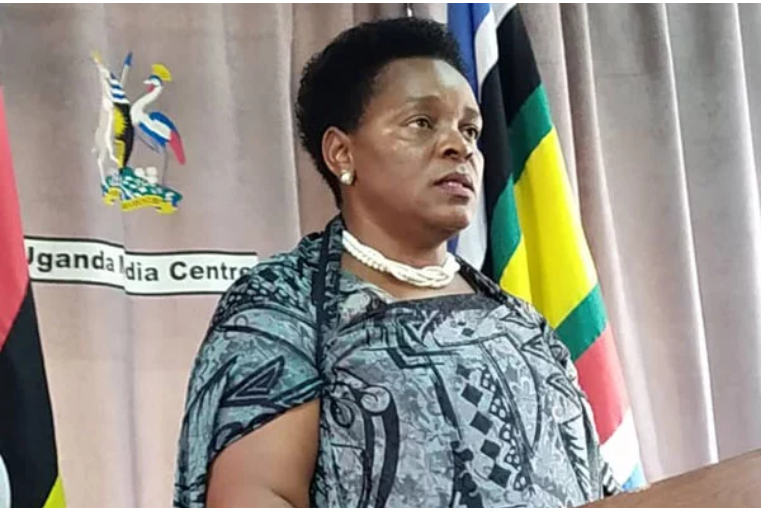
The minister for Gender and Culture has warned school matrons against initiating young girls into genital elongation.
Ms
Peace Mutuuzo on Wednesday said government will find avenues of talking
to girls, especially in primary schools, how to report the perpetrators
for encouraging a practice that does not add value to their health.
“We
shall target matrons in primary boarding schools. You are preparing our
girls who are not yet ready for marriage and may get partners who do
not care about that (genital elongation),” Ms Mutuuzo said while
addressing journalist in Kampala.
Pulling as it’s
popularly known, is a tradition common in central and southern parts of
Uganda and Rwanda, which basically involves the elongation of the labia
minora on the female private parts by girls and women.
The practice is widely criticised by the west for allegedly being outdated and barbaric.
Ms
Mutuuzo hinted on the vice while addressing journalists about the
forthcoming International Day for Zero Tolerance of Female Genital
Mutilation scheduled on February 6.
She said her
ministry needs an increase in the budgetary allocation from the current
Shs200 million to Shs1.2 billion to help fight female genital mutilation
which is predominant in Sebei sub region in eastern Uganda.
The
money is to, among other things, help in community sensitisation,
strengthen male engagement, establish shelters for FGM victims and
engage more elders in the fight against the practice.
Uganda has
four types of FGM; some of which are irreversible while others have
resulted into death due to over bleeding by the victims.
The types
of FGM practised in Uganda, according to government, are;
clitoridectomy, excision (practised by the Sabiny), infibulation or
pharaonic (practised by the Pokot) and other types- mainly genital
elongation practiced by Bantu speaking people, especially in central
Uganda.
Ms Mutuuzo said Uganda is experiencing an
emerging trend of medicalisation since some believe that the cutting is
less painful when done by a medical personnel.
She believes this has
been encouraged by the educated Ugandans who should have been in the
centre of the fight against the practice.
“The young people have
utilised social media platforms like WhatsApp and Facebook, to openly
campaign for preservation of FGM, as an important practice of the Sabiny
culture using the slogan “Our culture, our Identity” Ms Mutuuzo said.
The
minister said government was aware of the WhatsApp groups created to
aid the outlawed vice and are planning on how to track down the members
for prosecution.
Uganda enacted the Prohibition of FGM Act 2010 to
eliminate the practice but it has persisted due to cultural beliefs one
of which is enhancement to please men during sex.
According to UNFPA country representative, Mr Alaine Sibenaler, cultural practices are very difficult to eradicate.
“But should not be used as an excuse to abuse human rights,” he said.
He
said there should be dialogue between the young people and their
parents so that they understand the dangers of FGM to have concerted
efforts in fighting the practice in this generation.
Ministry of Gender reports indicate that between November 2018 and January 2019, about 350 girls underwent FGM in Kapchorwa, Kween and Bukwo districts.
Globally, it is estimated that approximately 100 to 140 million girls and women have undergone some form of genital mutilation or cutting.
Health experts say cutting has far reaching health effects including severe bleeding which may lead to death, permanent scars that may block the birth canal, obstetric fistula, urine incontinence, permanent disability, depression, trauma, feelings of disgust, loss of libido, among others.
In 2012, the UN General assembly designated February 6 as the international day of zero tolerance of FGM. The theme for 2020 is “Unleashing Youth Power”, One decade of accelerating actions for zero Female Genital Mutilation by 2030.
SRC:MONITOR