Why Bamugemereire Land Probe Victims Are After Her Neck
March 30, 2019
Kiruhura RDC, Councilor Arrested For Soliciting Bribe
March 30, 2019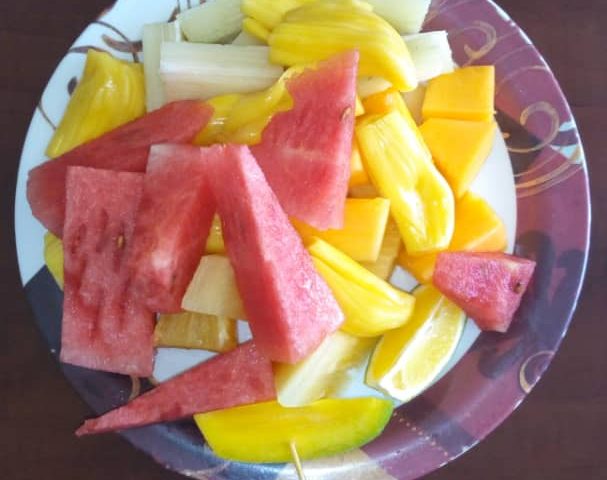
By Ruth Kasembo
The growth of the corporate culture in the country has given rise to a self-conscious lot of Ugandans who will go any length to stay healthy, happy and stylish. This lot is very picky in regard to how and what they eat, live or associate. On a typical day, the city corporate will spare time in the early morning and/or late evening to hit the gym or road for a workout just to keep fit and healthy. In the day, he/she will carefully choose his diet with the aim of keeping their weight in check. A survey shows that such corporates will make it a must to diet on fruits given their sure benefits in terms of weight management. But while a fruit comes in handy as the ultimate healthy snack, many a time not much attention is put on the source of these fruits. Unfortunately, reports show that these fruits could potentially be perfect avenues of typhoid and lately cholera which recently broke out in Kampala and ravaged some parts of the city.
POOR STORAGE
Speaking to The Second Opinion, Robert Kalumba, the KCCA deputy spokesperson, admits that the fruit eatoing craze could spark off a health hazard. Kalumba attributes his prediction on the fact that many of these vendors store their stock in very unhygienic ways.
“The fruits being vended are not safe because our research shows that some of these vendors store the stock daily spill over in drainage channels which are actually sewage routes,” Kalumba says.
It is however important to note that medical journals show that cholera is a deadly gastrointestinal infection caused by the Vibrio cholerae bacteria, and is primarily associated with contaminated water and food, raw or undercooked.
It is spread when an infected person who does not practice proper hygiene passes on infection to another person when handling food and water, the journals indicate.
And given the way fruits are handled in Kampala, chances are very high that they are unhygienic.
A survey around the city showed that the city fruit vendors operate in three major ways. Intriguingly, none of these gives the consumer a guarantee of hygiene.
The first lot of fruit vendors comprises those who vend or sit on the verandahs with their merchandise in baskets. Once you buy, they peel the fruit, wrap it in a polyethene bag and sell to you. The second lot is those who process the fruits and hawk them in plastic paper bags. These usually position themselves in busy areas like car parks or busy streets and will shove the packed fruits in the potential customer’s face at every available opportunity — sometimes spending long hours under the sun.
Kalumba however, argues that the consumers also share the blame in this fruits saga, saying they go ahead to buy the unhygienic fruits despite several warnings from KCCA.
According to the KCCA regulations, anybody who sells food in the city must have undergone a medical check-up by KCCA and is issued a licence. It is therefore vital for buyers to ask for these requirements before buying the fruits — but this hardly happens. “The people just buy the fruits whose origin they don’t know,” Kalumba says.
According to The Harvard Medical School Center for Health and the Global Environment, the shelf life of most fresh fruits and vegetables is enhanced by colder temperatures, which help slow the respiration process and thereby lengthen ripening time. This is because fruits continue to respire even when plucked from their source plants. The centre shows that the higher the respiration, the faster the fruit ripens— and rots as well. In a normal home setting, fridges help lengthen the shelf life of fruits. Kalumba observes that because the fruit vendors in Kampala don’t have fridges where to keep the fruits and vegetables, they preserve them crudely by keeping them in the drainage channels to keep them fresh at night. This exposure to sewage in the end breeds ground for cholera and related diseases like typhoid.
VENDORS SPEAK OUT
In light of the recent cholera outbreak, vendors we spoke to seemed to opine that the fear of unhygienic storage of fruits is addressed through thorough washing of the fruits.
Immaculate Abisemeza, a fruit vendor along Jinja Road, says she sells her fruits while mindful of her customers’ health.
“I wash all my fruits and hands before selling,” she says. She however admits that some of her colleagues do not mind the health of their customers and only care about the money, providing fertile ground for cholera to spread in the city.
On her part, Prossy Amurait, says he avoids peeling the fruits. “I don’t peel the mangoes, I just sell them as they are to avoid contamination from the dirt around and flies,” Amuriat says.
KCCA BAN
Following the recent cholera outbreak in some city suburbs, the KCCA banned the vending of cooked food, fruits and cold juices in all divisions as a way of curbing the spread of the disease.
Kalumba adds that to enforce this ban, a campaign has been on to chase all vendors who sell their fruits on the streets and other non-gazetted places. He however urges the political leaders to sensitize the vendors in their areas about the dangers associated with poor hygiene and sanitation.
“They (vendors) think we technical people want to eat their money, so I encourage politicians to talk to them because they listen to them more,” he said.
Kalumba added that to regulate these vendors, they asked them to register. “Some people tend not to care for their lives; we want to help them by chasing unscrupulous vendors off the streets by registering and retaining only those that meet the set standards,” he said.
Symptoms
Medical literature indicates severe cholera symptoms include watery diarrhea, vomiting, nausea, stomach pain, dehydration, dry skin and mucous membranes, and that if untreated, the infection can lead to death.
Further, according to the journals, treatment includes taking an Oral Rehydration Solution (ORS) to rebalance electrolytes and antibiotics. Up to 80% of cases can be successfully treated with ORS.
Researchers have estimated that each year there are 1.3 million to four million cases of cholera, and 21.000 to 143.000 deaths worldwide.
PREVENTION
The best protection is to avoid potentially contaminated food and water.
* Drink disinfected water and eat well cooked foods only.
* Wash your hands frequently and thoroughly with soap and water. If not available, use an alcohol-based sanitizer.
* Practice good body hygiene, and wash all fruits before eating.